
Last updated November 15, 2026
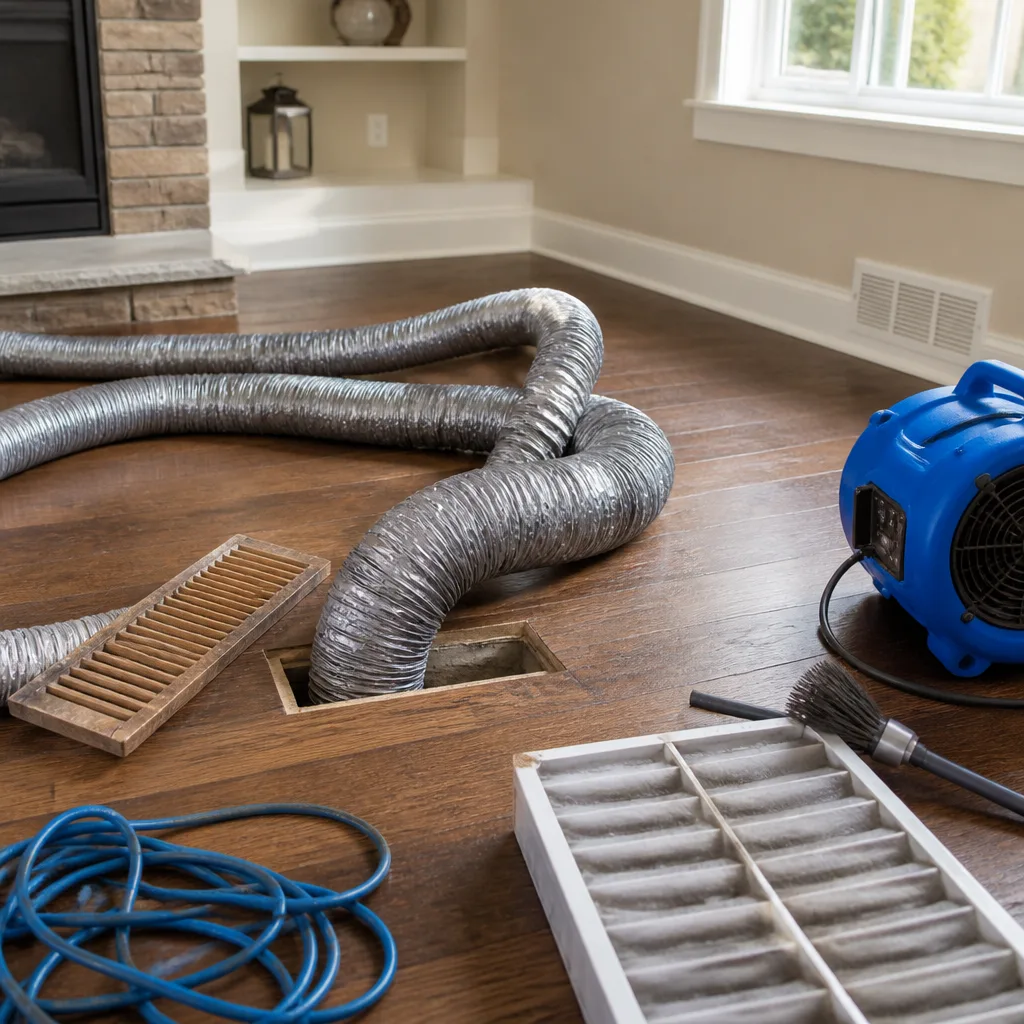 Whole-home duct cleaning
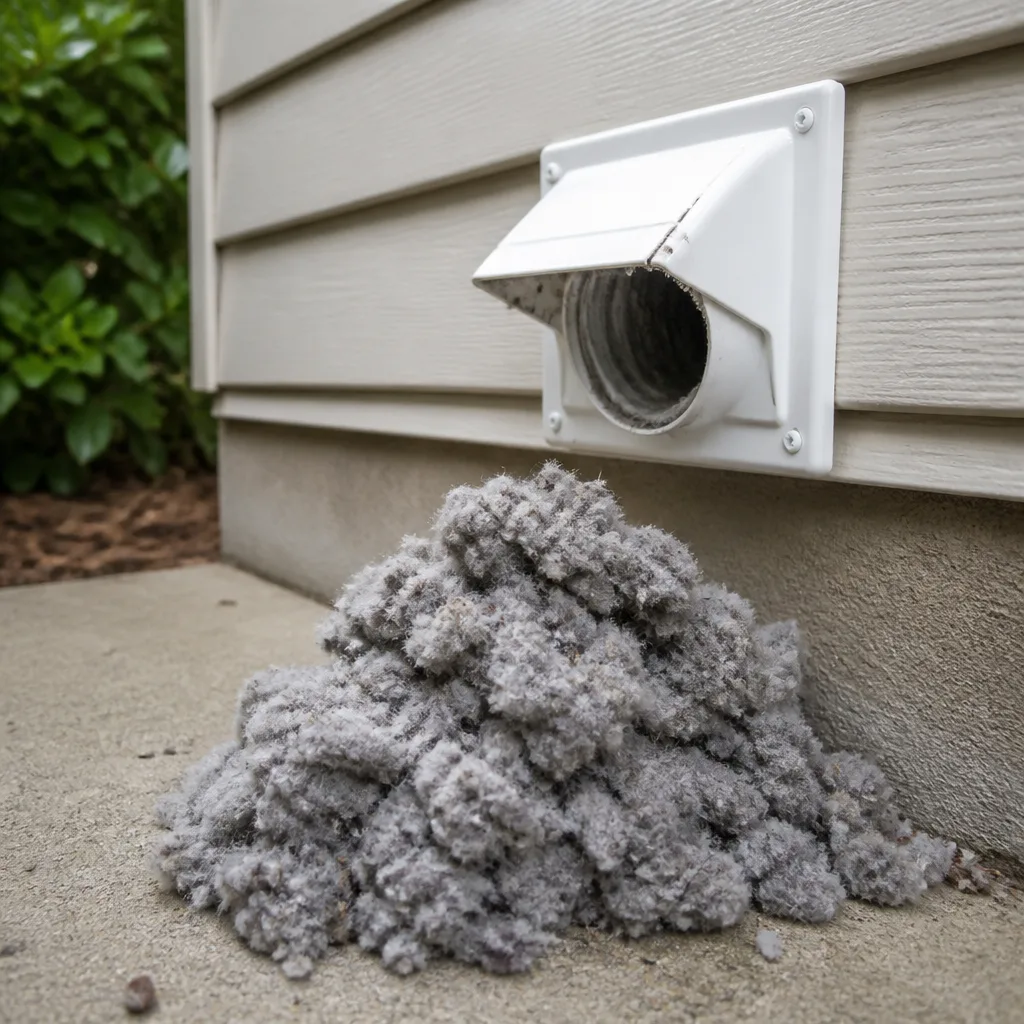 Dryer vent cleaning
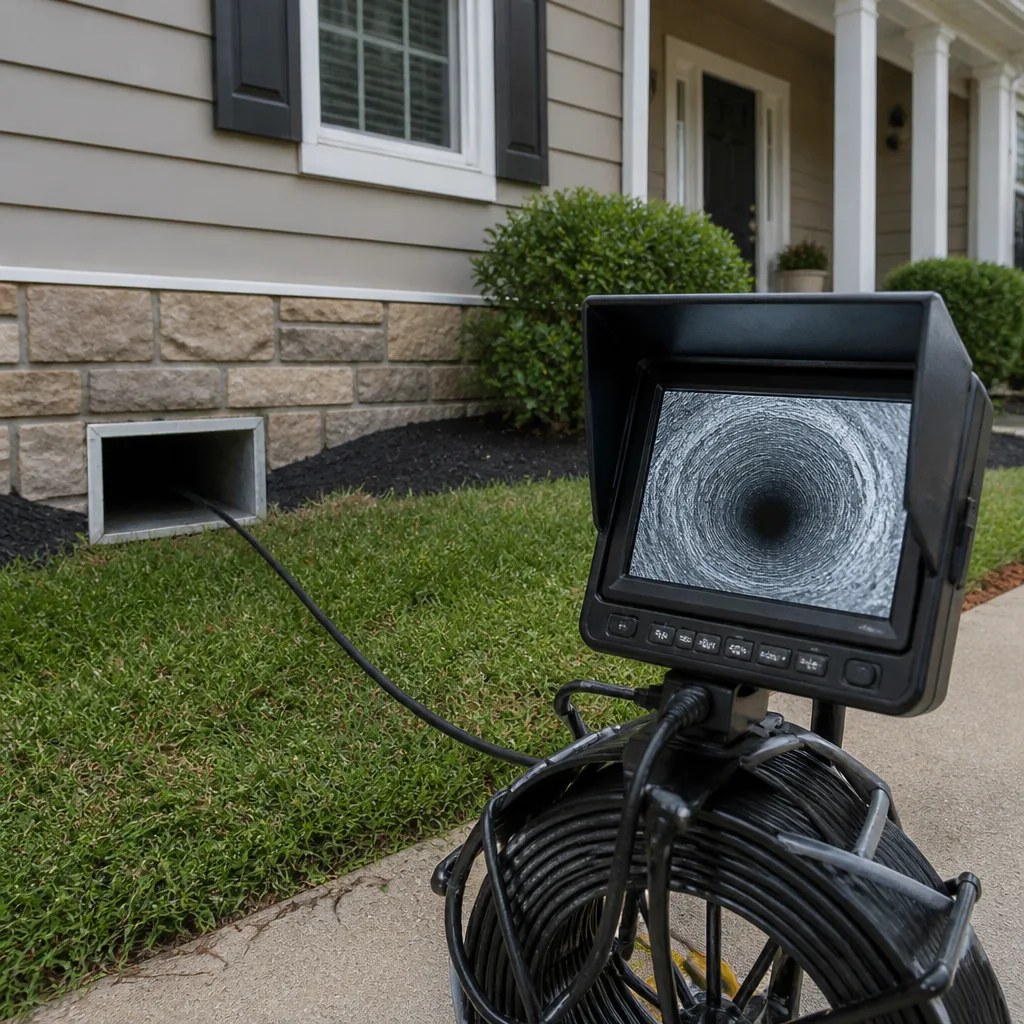 Camera inspection
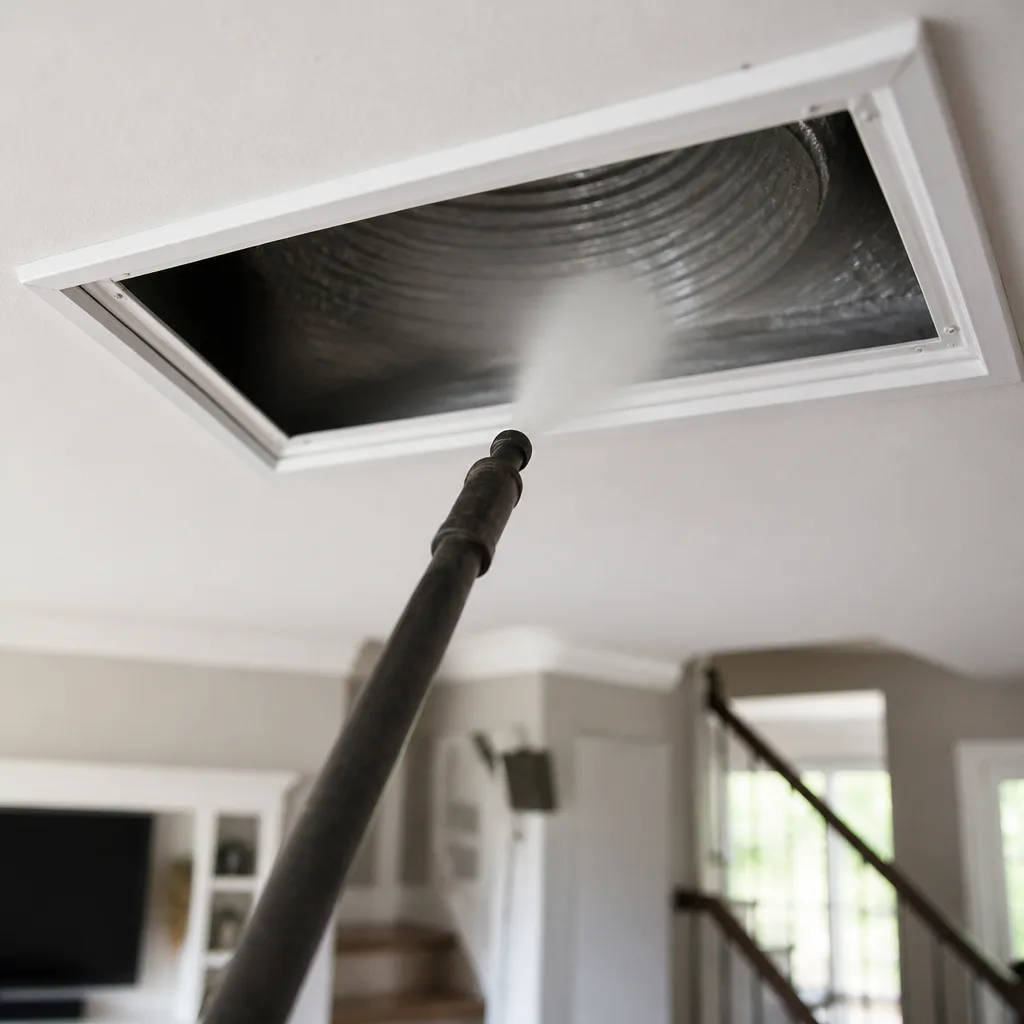 Sanitizing & deodorizing
Whole-system duct and dryer vent check with before-and-after photos - you see exactly what came out of your vents
That "$99 whole-house special" is a bait ad - the real number appears once they are in your hallway, or the "clean" is a shop-vac at the register. We photograph the inside of your ducts before and after instead.
Choosing the Right Air Duct Cleaning Brand: A Buyer’s Guide for Lakeland
Most homeowners vet a duct cleaning company by asking what it charges. That’s the wrong first question. Ask what vacuum system shows up in the driveway instead. The equipment a contractor invests in tells you more about how the job will actually go than any quote over the phone, because a crew can’t clean what its machine can’t pull. A shop running a hardware-store wet/dry vacuum and a shop running a rotary contact cleaner with contained HEPA filtration are not selling the same service, even if their bids look identical on paper. This guide walks you through the professional equipment names worth recognizing, how capacity affects results in Lakeland’s long single-story duct runs, and the exact questions that separate a real operation from a low-bid one.
Quick Answer
The right air duct cleaning brand is the one that can name its equipment, match machine capacity to your home’s duct layout, and show you before-and-after documentation of the work. In practical terms, look for professional rotary contact-cleaning systems (Rotobrush is the industry benchmark), contained HEPA filtration during service (Abatement Technologies is common), and a company that handles both cleaning and repair rather than cleaning alone. If a contractor can’t tell you what vacuum system they use before they arrive, that’s your answer.
Styles & brands we work with
- Whole-home duct cleaning
- Dryer vent cleaning
- Camera inspection
- Sanitizing & deodorizing
Table of Contents
- Why the equipment a company uses tells you more than its price
- The professional equipment brands worth recognizing
- Truck-mounted vs. portable vacuums in Lakeland’s ranch-style homes
- The three capacity questions a homeowner can actually evaluate
- Cleaning equipment vs. verification equipment: why both matter
- What it signals when a company won’t name its equipment
- Why cleaning alone isn’t enough: repair and dryer vent scope
- A step-by-step script for vetting a duct cleaner
Why the equipment a company uses tells you more than its price
Air duct cleaning pricing in Lakeland sits all over the map, and the spread isn’t driven by overhead or marketing. It’s driven by the machine. A contact-cleaning system that physically scrubs duct walls with rotating whips and brushes, paired with a vacuum strong enough to hold what it dislodges, represents a real capital outlay. A shop that air-washes a trunk line with a shop vac and a hose has almost nothing invested. Both can hand you a bill. Only one can remove what’s stuck to the duct interior.
Here’s the part most homeowners never hear. Dust, pet dander, and construction debris don’t float loosely inside a duct. They cling. Over years, fine particles bond to the galvanized steel with a thin film that gets baked on by the warm, humid air moving through the system. A vacuum alone lifts the loose layer and leaves the rest. Contact cleaning breaks that film loose first, then extracts it. That’s a two-part operation, and it requires equipment designed to do both parts.
The National Air Duct Cleaners Association (NADCA) asks its certified members to document the equipment used on a job, which is a useful signal in itself. It means asking “what vacuum system do you run?” is a legitimate, industry-standard vetting question, not an overly technical one. A professional expects it. A blow-and-go operation tends to dodge it, because the honest answer is a wet/dry vac from a big-box store.
For Lakeland homeowners, this filter saves time. Rather than calling five companies and comparing five numbers you can’t verify, you call two or three, ask about equipment, and eliminate most of the field before anyone gets to pricing. You can read more about how the work itself is done on our air duct cleaning service page.
The professional equipment brands worth recognizing
You don’t need to become a duct-cleaning equipment expert. You need to recognize three or four names well enough to hear them and know what they mean. When a company names its gear specifically, it’s telling you it made a capital decision, not a marketing one.
- Rotobrush – Rotary contact-cleaning systems with whips and brushes that agitate debris off duct walls while a vacuum pulls it away. This is the industry benchmark for residential contact cleaning, and it’s what remediation contractors reach for when a duct is genuinely dirty rather than lightly dusty.
- Abatement Technologies – Negative-pressure HEPA filtration units used to capture dislodged particulates at the source during cleaning. This is the equipment that keeps what comes out of your ducts from recirculating into your living room while the work is happening.
- PowerVac – Truck-mounted and high-capacity vacuum systems built for larger duct networks and longer runs. Where these are deployed, the machine has the raw pull to move serious volume of air through a whole-house layout.
- Nikro – Professional-grade vacuum and filtration equipment used widely by restoration and remediation contractors. Seeing Nikro in the mix confirms commercial-tier capability rather than consumer-grade tooling.
There’s a second tier of names that signal something different: integration with the air quality products already in your home. A company familiar with Aprilaire filtration and humidification components, or with Honeywell system controls and media cabinets, can clean around and through the equipment already installed in a typical Lakeland house without damaging it. That familiarity matters when a media cabinet or bypass humidifier sits inline with the return duct.
We run Rotobrush rotary contact systems, Nikro professional equipment, and Abatement Technologies HEPA filtration during service. The reason we name them plainly is simple: they’re the tools the work actually requires. A company that won’t tell you what it uses is telling you something too.
Truck-mounted vs. portable vacuums in Lakeland’s ranch-style homes
Lakeland has a lot of single-story ranch homes, and that layout creates a specific cleaning problem. Long horizontal trunk runs in the attic or crawl space, with branch lines reaching out to rooms far from the air handler. Distance is the enemy of vacuum pressure. A machine that pulls hard at the source can lose meaningful suction 40 or 50 feet down a straight trunk line, especially if the duct is undersized or has a few elbows in it.
Truck-mounted systems solve this by generating high airflow volume, which holds up better over distance. Portable high-capacity units can do the same job when they’re sized correctly and access points are placed well. The failure mode isn’t truck vs. portable by itself. It’s an underpowered machine paired with too few access cuts, so the far end of the run never gets properly cleaned.
What this means for a Lakeland homeowner evaluating a quote:
- A house with a single central return and long branch runs needs more than one simultaneous access point to clean properly. Ask where the crew plans to cut in.
- Attic-mounted air handlers, common here, mean the return side is often the dirtiest and hardest to reach. Ask specifically how the return trunk gets cleaned.
- Lakeland’s warm, humid climate keeps condensation and dust interaction constant, and a system that runs year-round with short off-cycles loads up faster than a system that rests half the year. Expect heavier buildup, not lighter.
- If a company shows up with one portable machine and no plan for access points, the far bedrooms likely won’t be touched.
This is where contact cleaning earns its keep. Rotating whips and brushes work along the entire duct length from an access point, agitating debris toward the vacuum rather than relying on airflow alone to lift it. On a long single-story run, that mechanical action is what makes the difference.
The three capacity questions a homeowner can actually evaluate
You don’t need a spec sheet to judge a machine, but three numbers and details get you most of the way there. Ask these and listen carefully to the answer.
- What CFM does your vacuum system pull? CFM means cubic feet per minute, the volume of air the machine moves. Higher CFM means stronger cleaning through long duct runs. You don’t need a specific threshold, but a company that answers with a real number and explains it is a company that knows its equipment. A shrug is a red flag.
- What hose diameter do you run? A wider hose moves more air. A narrow hose on a long run loses suction quickly. Professional setups use larger-diameter hose sized to match the vacuum. If the answer sounds like a shop vac hose, it probably is one.
- How many access points will you open simultaneously? Cleaning a branched residential system well means working multiple access points at once so air moves through the trunk as intended. One hole at the air handler won’t clean four bedrooms. Ask how many cuts they’ll make and where.
There’s a fourth question that isn’t about capacity but matters just as much: do you filter the air during cleaning? Dislodging years of debris and letting it float through the house defeats the purpose. Negative-pressure HEPA filtration like Abatement Technologies units captures particles at the source and keeps the living space clean during the work. When someone cleans your ducts in a Lakeland home with the AC running, you want that answer to be yes.
Write the answers down. A company that gives the same three answers at the estimate and on the day of service is operating consistently. One that promises Rotobrush and shows up with a rented shop vac is improvising, and you should stop the job right there.
Cleaning equipment vs. verification equipment: why both matter
Two different equipment categories get conflated in this trade. Cleaning equipment does the work. Verification equipment proves the work happened. A professional operation carries both.
On the cleaning side, you’re looking at rotary contact tools, high-capacity vacuums, and HEPA filtration. On the verification side, you’ll see inspection cameras that reveal duct interiors before and after, airflow meters that measure whether the system is moving air as it should, and documented before-and-after photos of the actual ducts in your home.
That last one is worth dwelling on, because it addresses the biggest reason homeowners hesitate to book duct cleaning at all: the industry’s reputation for showing up, spending 45 minutes waving a hose around, and handing over an invoice. Before-and-after photos of your own ducts are the counter to that. They’re not marketing photos from a stock library. They’re the before and after of the trunk line and branch runs the crew actually touched. Ask for them up front, before work starts, and see whether the company treats that request as routine.
Airflow measurement matters too. If the crew cleans and your system still moves the same weak volume of air, something else is going on: a crushed flex run, a disconnected joint, a damper stuck closed. That’s when Lakeland Duct Cleaning can recommend repair instead of scheduling you for another cleaning next year. Cleaning a system with a disconnected duct just recontaminates it. So the verification step isn’t a nice extra. It’s how you know you’re not paying twice for the same problem.
What it signals when a company won’t name its equipment
Sometimes the answer to “what equipment do you use?” is vague. “We use professional equipment.” “We have the latest tools.” “We use a special process.” None of those are answers, and the pattern behind the dodge is worth decoding.
- They don’t know. If the person on the phone can’t name the vacuum system, they’re likely not the one operating it, and the company may not have standardized equipment at all. Subcontracted crews with varying gear produce varying results.
- The equipment is consumer-grade. A wet/dry vacuum from a home improvement store can technically move air. It cannot contact-clean a duct interior. Companies that use them often avoid naming brands because a name would give the game away.
- They’re hiding a low-bid model. Blow-and-go operations are priced to win the phone call, then cut corners on site. Naming real equipment brands costs nothing, so the only reason to avoid it is that the honest answer is a weak one.
- They can’t address repair. A company that only cleans can’t do anything about a duct that’s separated at a joint or crushed in the attic. If your household air has been getting worse, cleaning a broken system won’t fix it.
- They don’t cover dryer vents. If the company treats dryer vent cleaning as an upsell for a different crew, that fire-safety work may fall through the cracks.
None of these are automatic disqualifiers on their own, but a company that fails two or three of them at once is telling you which tier it operates in. The good news is that the honest answer takes about ten seconds, so the conversation is fast.
Why cleaning alone isn’t enough: repair and dryer vent scope
A duct cleaning company that only cleans is limited by definition. It removes what’s inside ducts and stops at the wall. It can’t fix what’s broken. That matters in Lakeland houses with older duct systems, attic-mounted air handlers, and renovations layered over decades. Duct joints separate. Flex runs get crushed under foot traffic in the attic. Register boots pull away from the drywall. A cleaning crew will dislodge debris from a joint gap and then vacuum it right back through the gap into the return. That’s not a cleaning failure. It’s a scope problem.
Duct repair is the service that closes the gap. When the crew can inspect, seal, reconnect, or replace a damaged section on the same visit as the cleaning, the system goes back together correctly rather than getting cleaned around a hole. Three services matter here, and they work as a set:
- Air duct cleaning. Contact cleaning of the trunk and branch runs, with HEPA filtration during the job, verified with before-and-after documentation.
- Air duct repair. Addressing disconnected, crushed, or deteriorating ductwork that cleaning alone can’t fix. This is the differentiator that separates a full-system operation from a maintenance-only one.
- Dryer vent cleaning. A distinct fire-safety service, not an add-on. Lint accumulation in the dryer vent is one of the leading causes of household fires, and the vent run is often the dirtiest duct in the house because it’s the only one handling damp lint under heat.
Dryer vent safety deserves its own line here because the stakes are different. A clogged clothes dryer duct restricts airflow and allows heat to build. If your dryer takes two cycles to dry a load, or the exterior vent flap doesn’t move much air when the dryer runs, that’s a vent that needs attention. We treat it as a directed service under our dryer vent cleaning page rather than a throw-in, because it’s a fire-prevention job with a specific method and a specific checklist. Guardsman-associated protective treatments are also available as part of the service scope for homeowners who want them.
Full-system thinking means matching the service to the problem. Cleaning a duct that’s disconnected doesn’t help. Repairing a duct without cleaning the debris that’s already inside doesn’t either. Neither one handles a lint-choked dryer vent. A company that can do all three under one scope, without handing you off to a subcontractor, is the one that can actually resolve what you called about.
A step-by-step script for vetting a duct cleaner
Here’s the sequence that works. It takes about 15 minutes per call and saves you an entire afternoon of second-guessing.
- Ask what equipment they use before mentioning price. Listen for named brands like Rotobrush, Abatement Technologies, Nikro, or PowerVac. If the answer is generic, note it.
- Ask what CFM their vacuum pulls and what hose diameter they run. A real number and a real explanation show familiarity. A shrug tells you they either don’t know or won’t say.
- Ask how many access points they’ll cut and where. A branched Lakeland ranch home needs multiple simultaneous access points. Ask them to describe the plan for your layout.
- Ask whether they use HEPA filtration during cleaning. If they don’t filter, the debris they dislodge goes somewhere in your home.
- Ask to see before-and-after photos of the actual ducts when the work is done. If the answer is “of course,” you’re on the right track. If the answer is vague, keep calling.
- Ask whether they handle duct repair and dryer vent cleaning in the same scope. A company that cleans, repairs, and clears dryer vents in one operation can solve problems a cleaner alone can’t.
- Confirm the flat price per system before work starts. A written estimate that matches the final invoice is the whole point. No per-vent pricing, no surprise add-ons.
Two or three calls and you’ll have a clear picture of who’s running professional-grade equipment and who’s running a wet/dry vac with a marketing budget. For a homeowner in Lakeland, that 15-minute filter is the difference between a cleaning that lasts and one that doesn’t.
You can also read about how we approach the work for Lakeland homeowners directly.
Common Mistakes to Avoid
- Leading with price instead of equipment. The lowest quote on the phone is almost always the weakest machine on site. Ask what vacuum shows up before you ask what it costs.
- Accepting a per-vent quote. Charging by the vent encourages cutting corners on long horizontal runs. A flat price per system, agreed in writing, is how you keep the crew focused on the actual duct network rather than a headcount of registers.
- Assuming a cleaning fixes a comfort problem. If one bedroom never cools properly, the problem may be a crushed flex run or a disconnected joint rather than debris. Cleaning a broken duct just recontaminates it. Ask whether repair is on the table.
- Skipping the dryer vent. Homeowners in Lakeland often book duct cleaning and forget the dryer vent, which is the dirtiest duct in the house and the one with fire-risk consequences if it’s choked with lint.
- Not asking for before-and-after photos. The proof is in the pictures. If a company can’t show you the ducts in your own home before and after, you can’t verify the work happened.
- Booking a company that subcontracts. If the cleaner, the repair crew, and the dryer vent team are all different companies, no one owns the outcome. One company, one scope, one invoice.
- Ignoring the filtration question. Cleaning dislodges years of debris. If the company isn’t running HEPA filtration during the job, that debris goes into your return air and back through the house.
See the difference
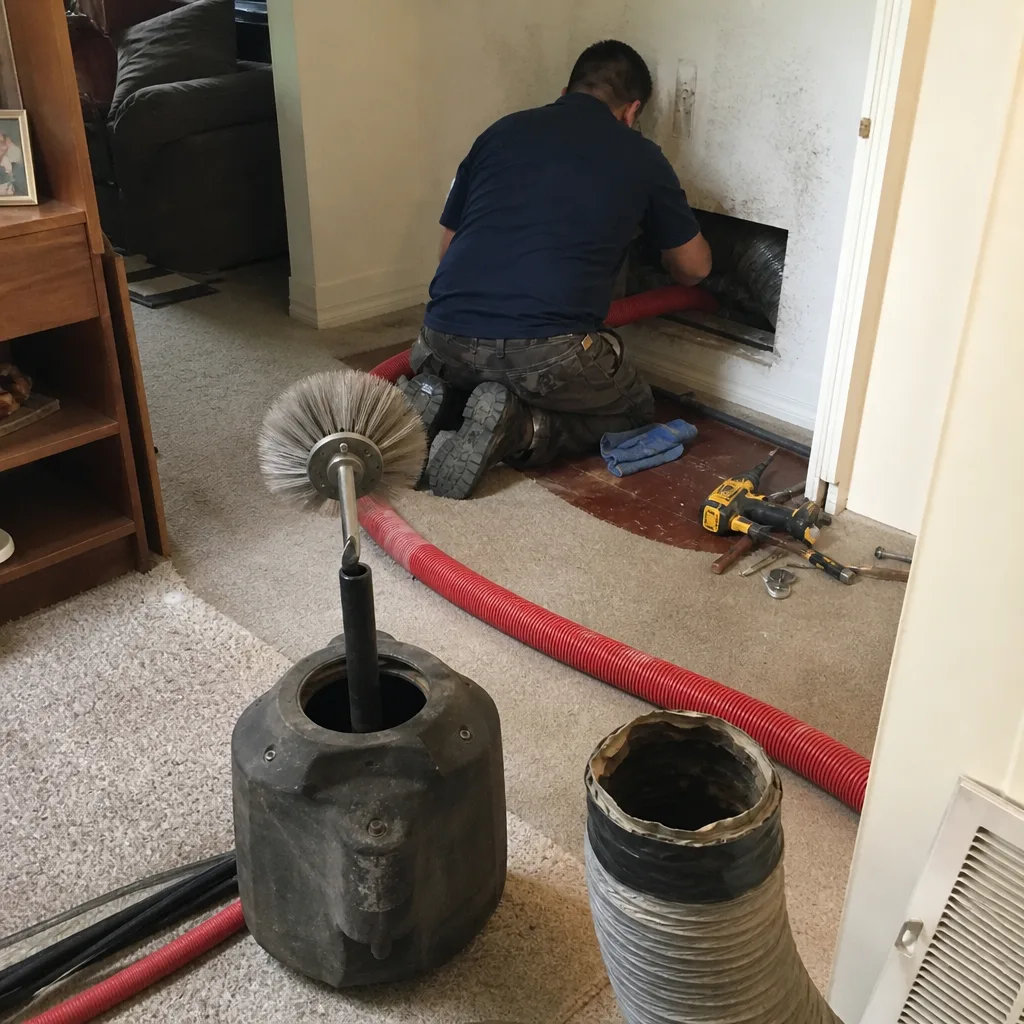 Before
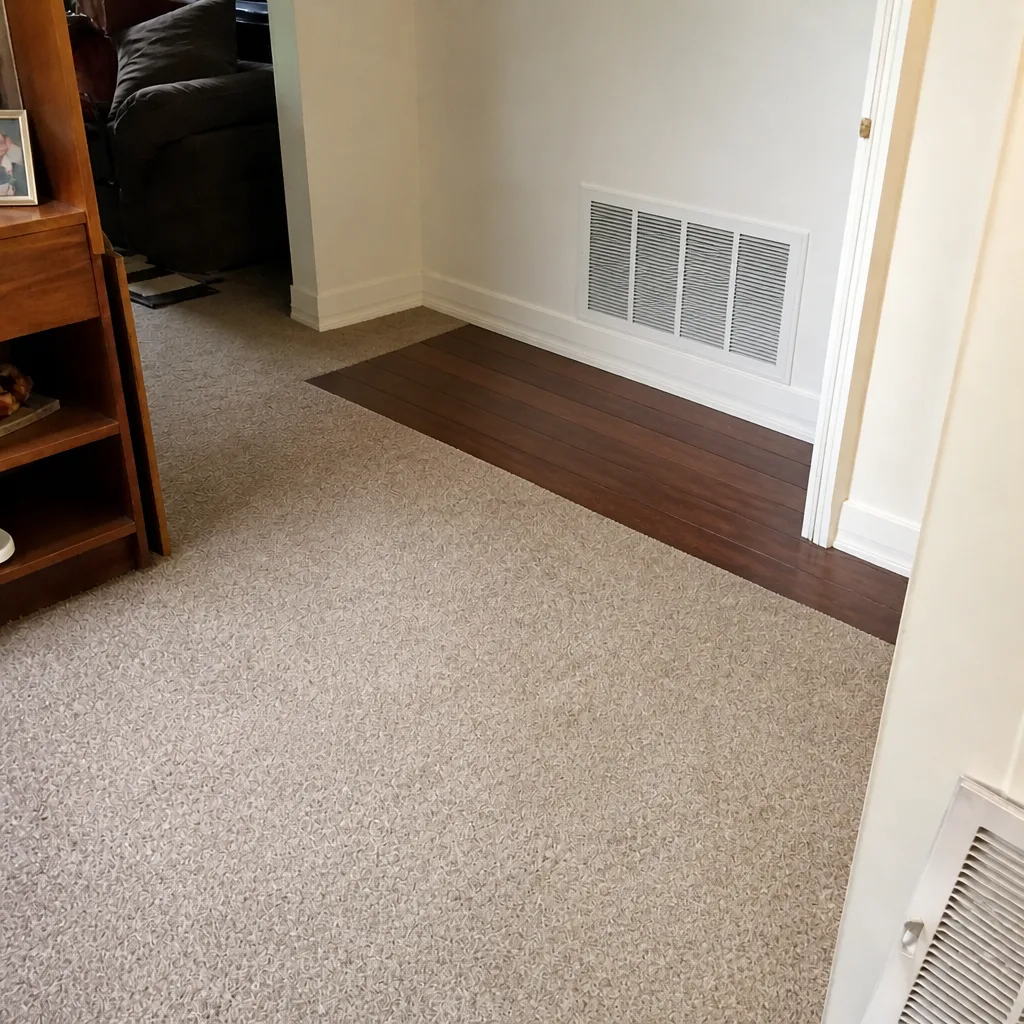 After
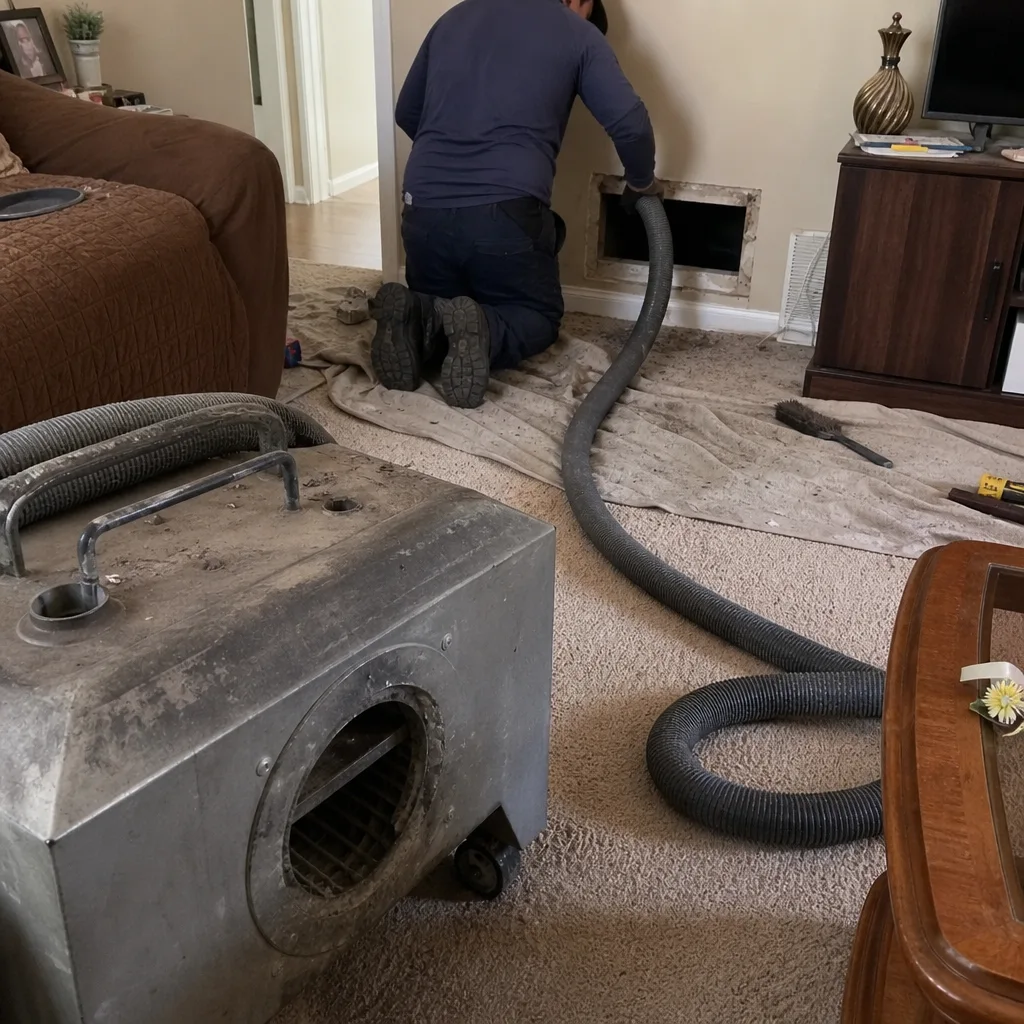 Before
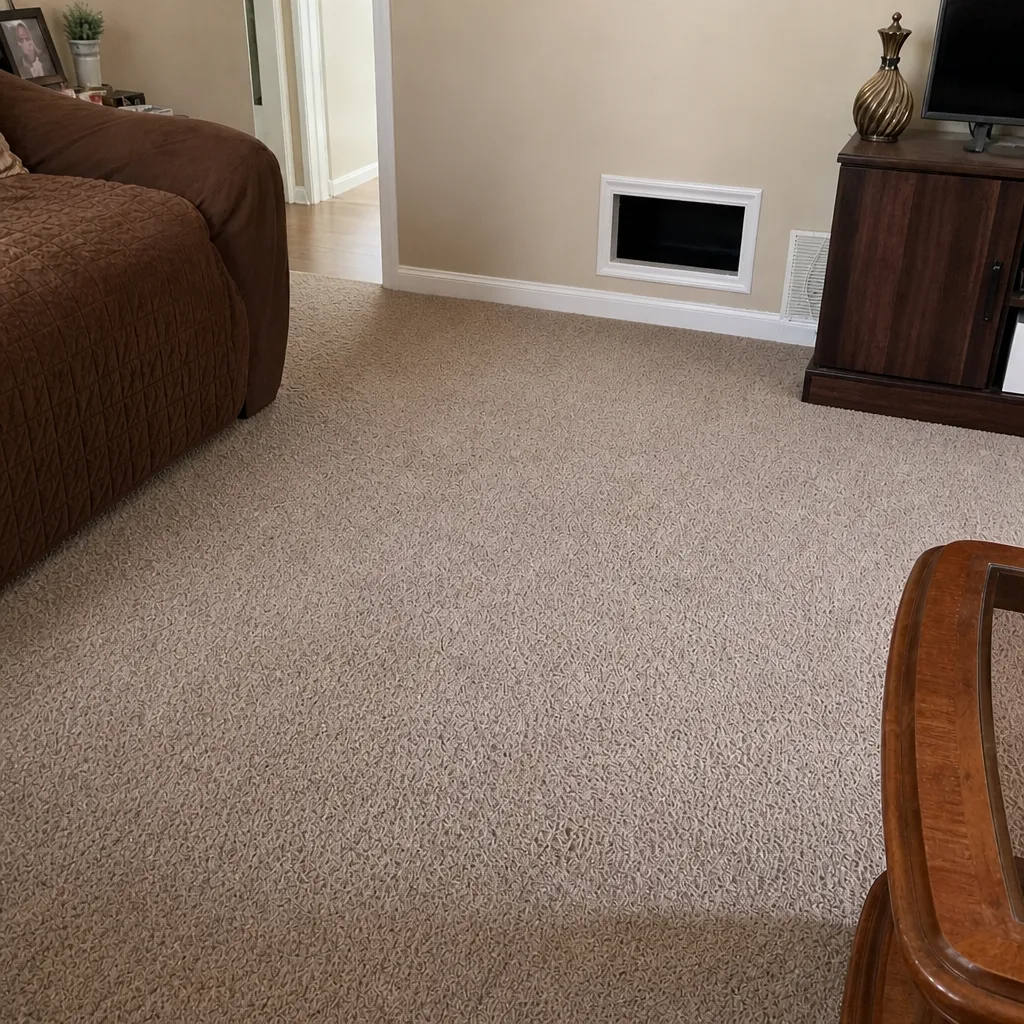 After
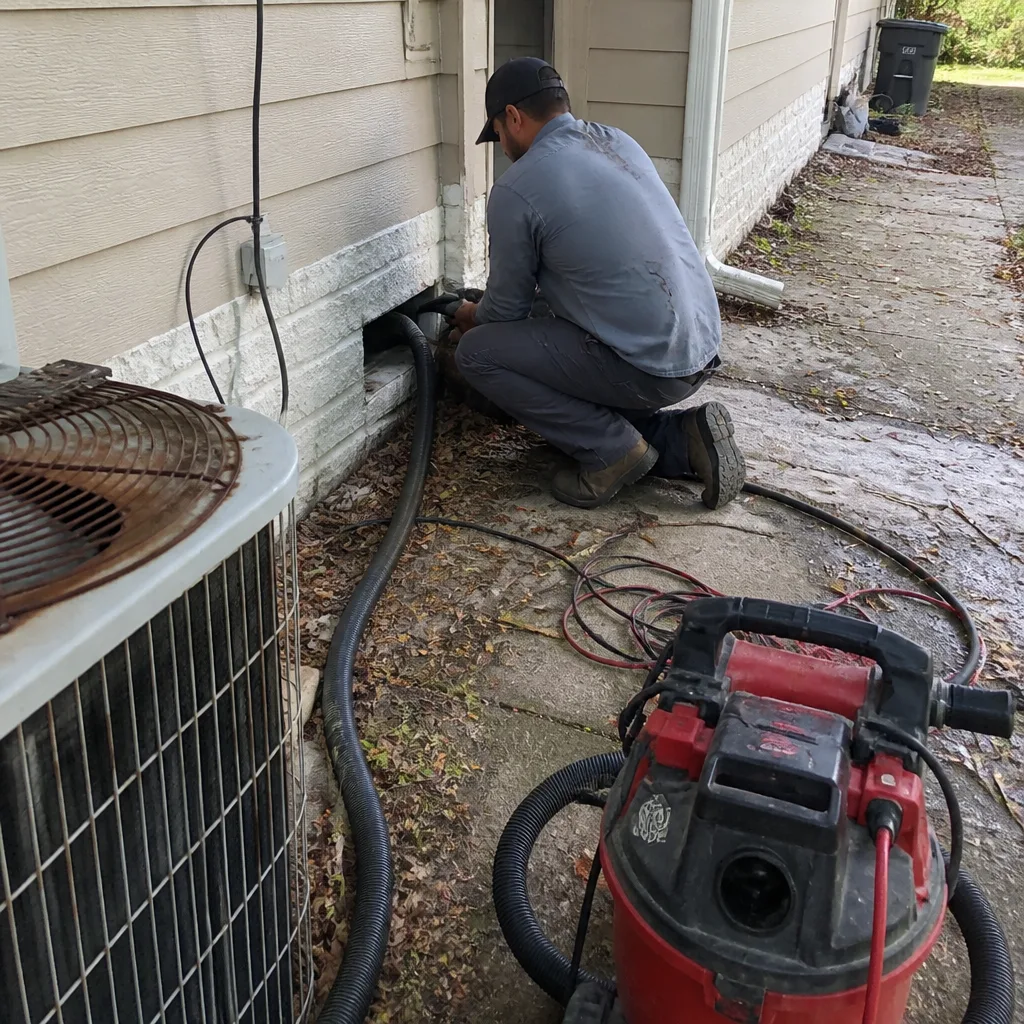 Before
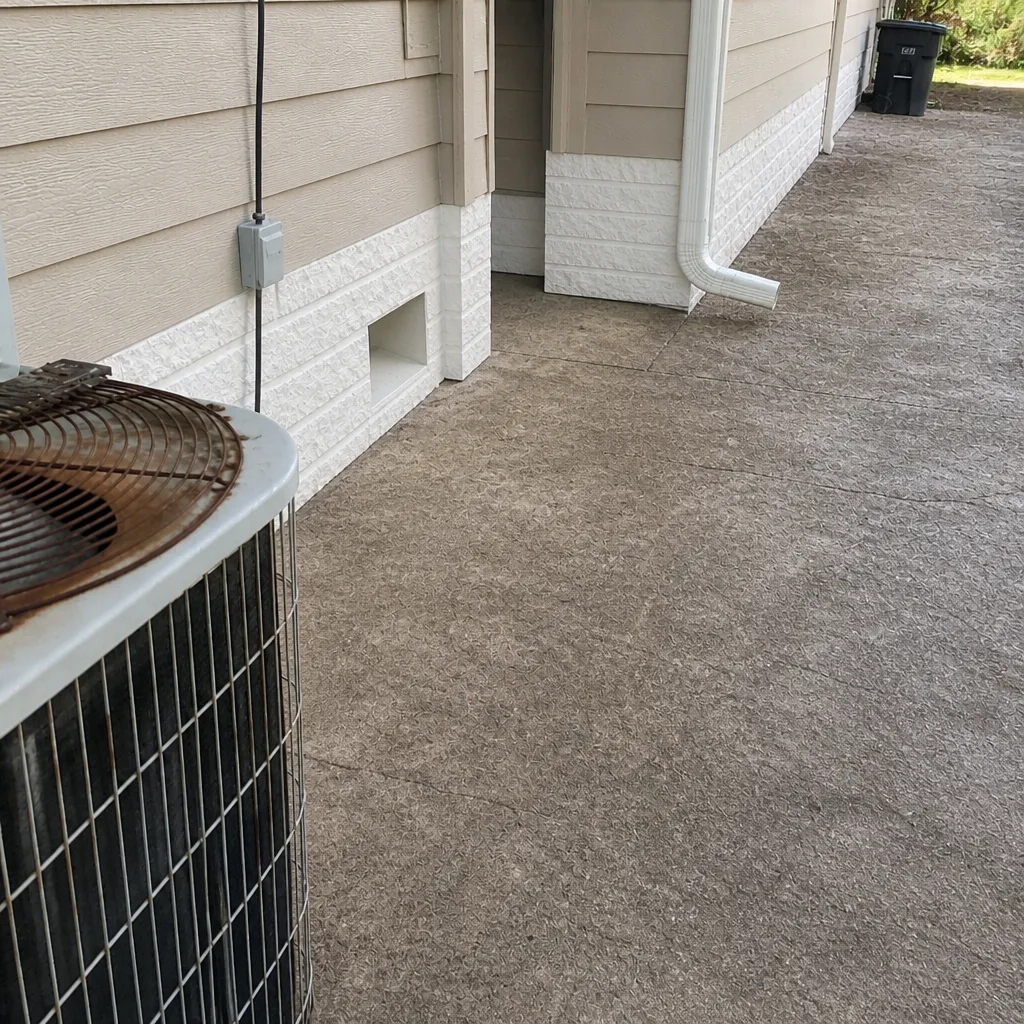 After
When to Call a Professional
Some duct problems are obvious. Others take a trained eye. Call a professional when you’re moving into an older Lakeland home and don’t know the service history of the ductwork. Call when someone in the house is dealing with allergy symptoms that don’t improve, especially after a renovation or a long vacancy. Call when you can see dust streaming from a register, or notice dark staining around a vent. Call when one room never gets enough air and you suspect a crushed or disconnected duct rather than a filter issue. And call when the dryer takes two cycles to dry a load, or the exterior vent flap barely moves; that’s a fire-safety issue and a professional job. We offer free estimates in Lakeland – call (855) 360-9053. Our technicians have up to 8 years of experience, and the estimate is set per job in writing before any work starts.
Frequently Asked Questions
Air duct cleaning in Lakeland typically runs as a flat price per system rather than a per-vent rate, and the number depends on the size of the duct network, the number of access points required, and whether repair is needed. What matters more than the range is the flat price in writing before work begins. If a company quotes per vent, that’s a pricing model that rewards cutting corners. Call (855) 360-9053 for an exact quote – estimates are free.
Cheap quotes usually reflect weak equipment, not efficiency. A company using a hardware-store vacuum can bid lower because it isn’t investing in a rotary contact-cleaning system, HEPA filtration, or multiple simultaneous access points. The job looks similar on the invoice but the duct interior ends up barely touched. Ask what vacuum system the company uses before comparing prices – the answer explains the spread.
Recognize Rotobrush for rotary contact cleaning, Abatement Technologies for negative-pressure HEPA filtration during service, PowerVac for high-capacity vacuum systems, and Nikro for professional-grade restoration equipment. Familiarity with Honeywell and Aprilaire components also signals a company that knows how to work around the air quality equipment already in your home. If a company can’t name its gear, that’s the answer you needed.
Ask for before-and-after photos of your own ducts, not stock images. A professional operation photographs the trunk and branch runs before cleaning and shows you the same areas afterward, along with airflow readings if the system had a comfort issue going in. If a company brushes off the request, that’s a sign to keep looking.
Most homes don’t need annual cleaning. In our experience, a well-maintained system in a Lakeland home usually goes several years between cleanings unless there’s a specific event: a renovation that filled the ducts with drywall dust, a long vacancy, pets, or a confirmed repair issue. Dryer vent cleaning follows a different schedule, roughly yearly for most households, because lint accumulates faster and the fire-risk stakes are higher.
We handle both. Air duct repair is a distinct service from cleaning, covering disconnected joints, crushed flex runs, and deteriorating sections that cleaning alone won’t resolve. Cleaning a broken duct just recontaminates it, so when we find damage during an inspection, we recommend repair rather than a second cleaning. Call (855) 360-9053. We answer 24/7, with fast dispatch from 7am to 7pm, Sunday through Friday.
The Bottom Line
The brand of equipment a duct cleaning company runs is a proxy for how seriously it takes the work. Named professional systems like Rotobrush, Abatement Technologies, Nikro, and PowerVac signal real investment and cleaning capacity. Capacity questions – CFM, hose diameter, simultaneous access points – tell you whether the machine can clean a long Lakeland single-story duct run all the way to the far bedrooms. Verification equipment, before-and-after photos and airflow readings, prove the work happened. And a company that can clean, repair, and clear dryer vents under one scope can solve the whole problem instead of just part of it. Ask the questions, listen for specifics, and the right company will identify itself on the first call.
When you’re ready to have the conversation, contact us for a free estimate. Call (855) 360-9053. We answer 24/7, with fast dispatch from 7am to 7pm, Sunday through Friday. One flat price per system, agreed in writing before any work starts, with before-and-after photos of your own ducts when we’re done.
Written by the team at Lakeland Duct Cleaning.