
Last updated November 15, 2026
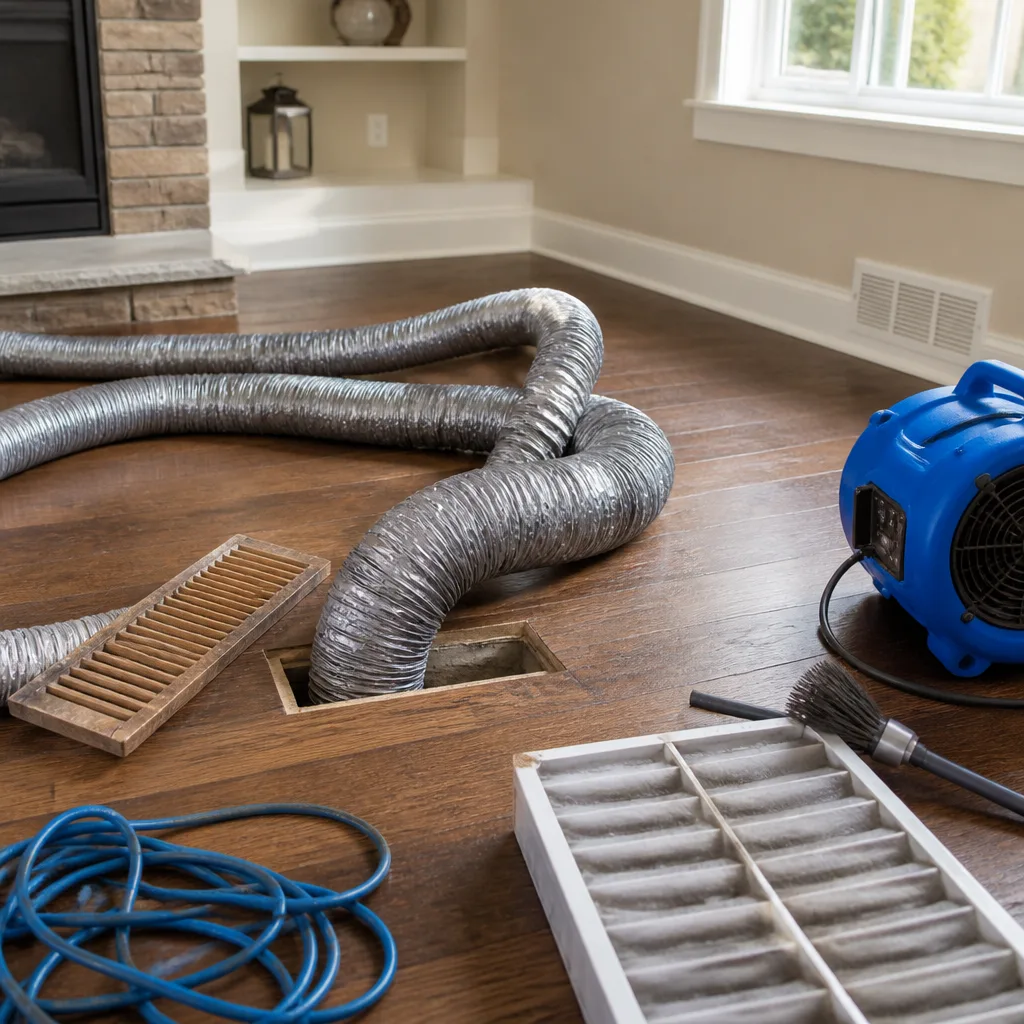 Whole-home duct cleaning
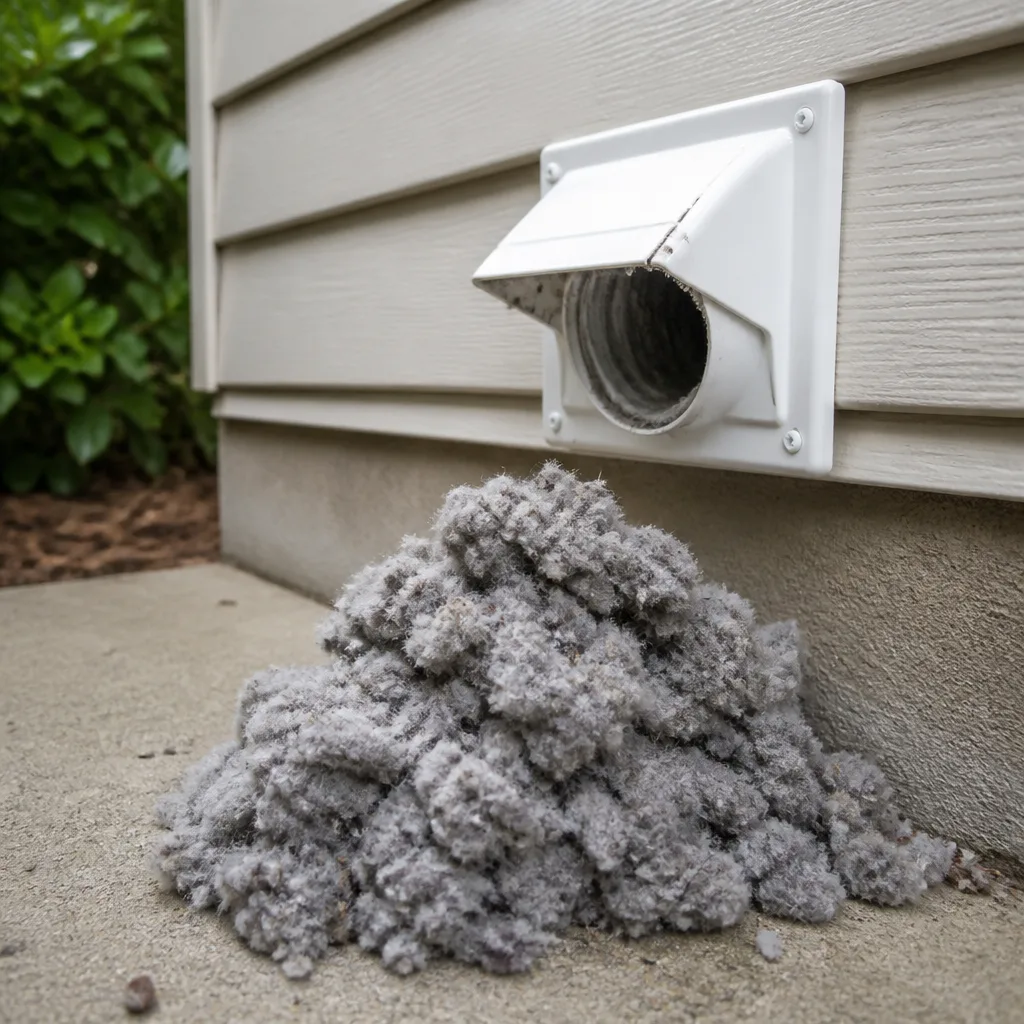 Dryer vent cleaning
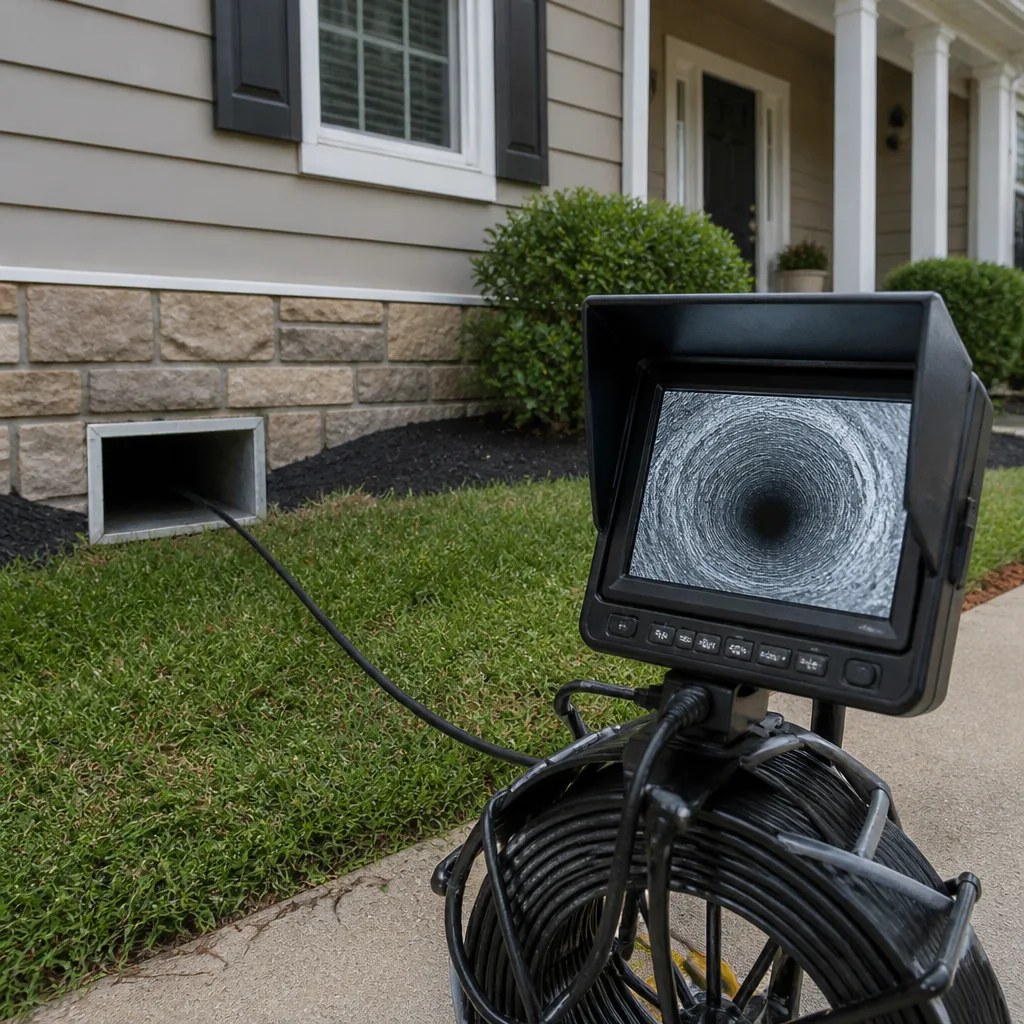 Camera inspection
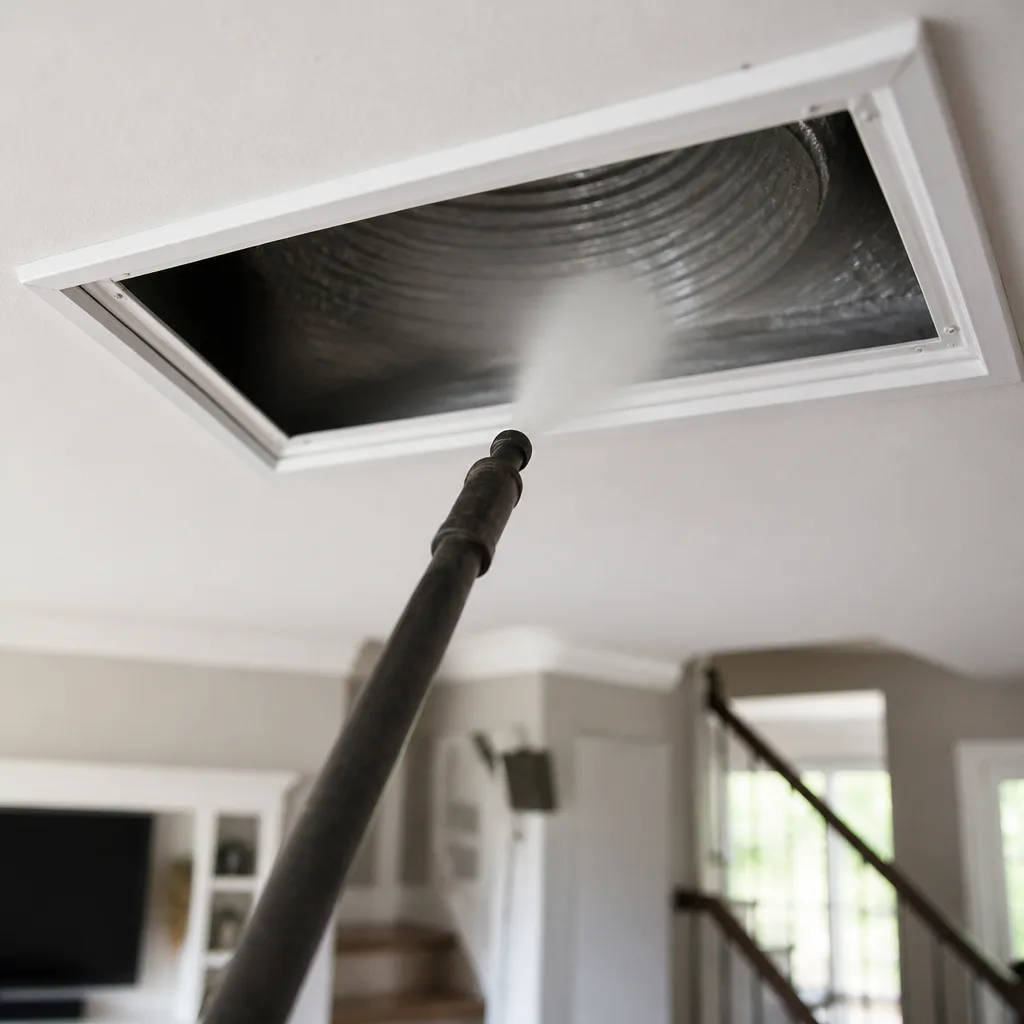 Sanitizing & deodorizing
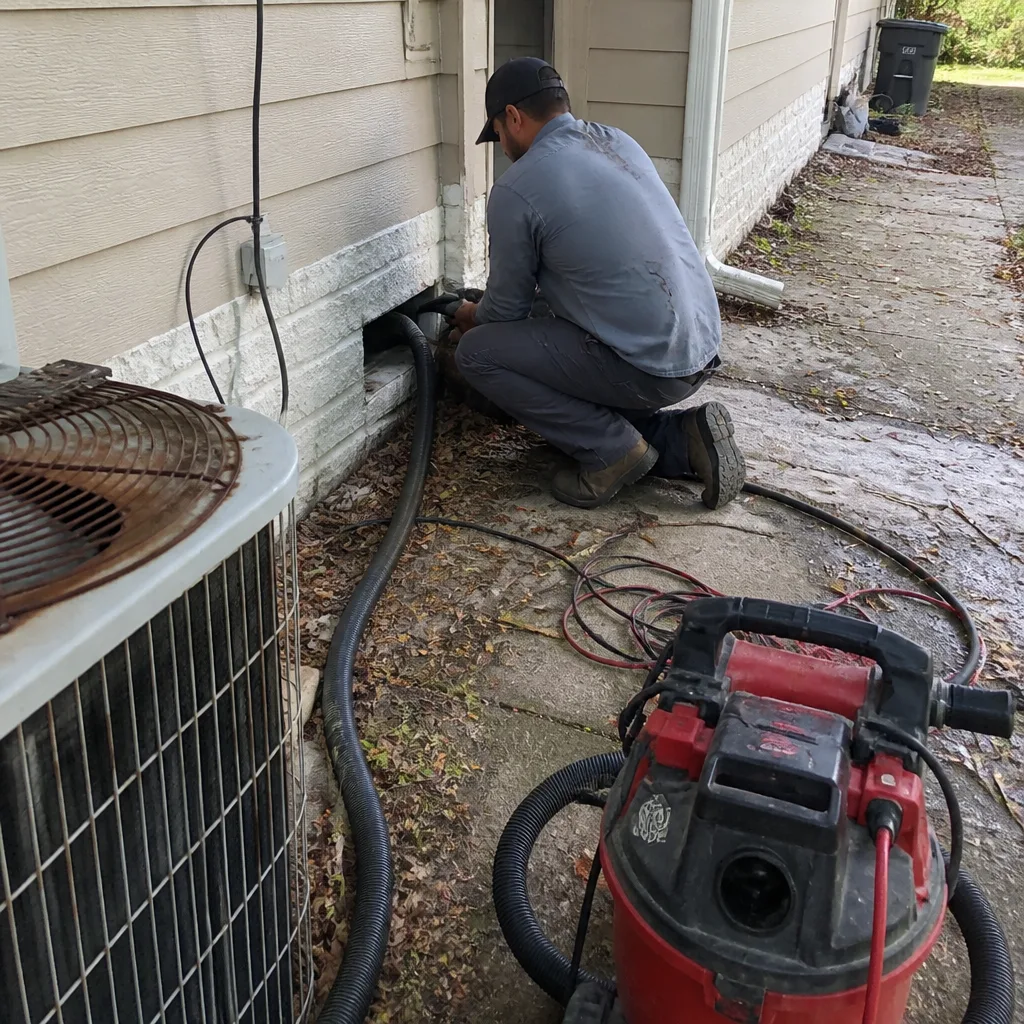
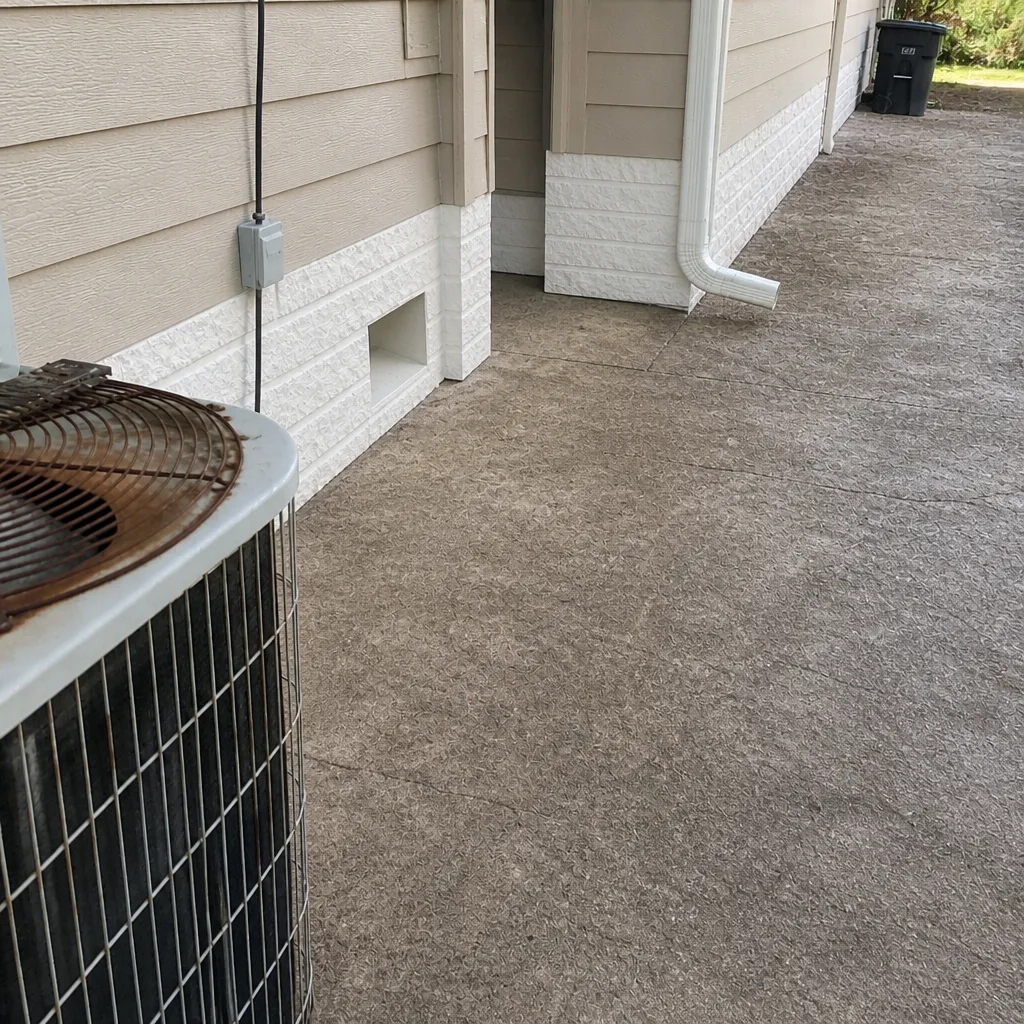
Whole-system duct and dryer vent check with before-and-after photos - you see exactly what came out of your vents
That "$99 whole-house special" is a bait ad - the real number appears once they are in your hallway, or the "clean" is a shop-vac at the register. We photograph the inside of your ducts before and after instead.
How to Hire an Air Duct Cleaning Contractor in Lakeland: A Step-by-Step Guide
The cheapest quote is often the most expensive decision you’ll make on your HVAC system. Hiring an air duct cleaning contractor in Lakeland isn’t a shopping problem, it’s a vetting problem. The wrong crew can loosen years of dust and debris inside your ductwork, let it settle back into your living space, and leave you with a system that’s dirtier than when they arrived. The FTC has issued formal warnings about duct cleaning scams where low-bid crews arrive, spray something, and pressure homeowners into unnecessary mold treatments on the spot, a pattern documented in Florida markets. This guide gives you a process: the exact questions to ask before booking, the red flags that appear during a free estimate, what a legitimate scope of work looks like in writing, and how to verify a contractor’s license through the state before anyone touches your system.
Quick Answer
To hire an air duct cleaning contractor in Lakeland, ask five questions before booking: what vacuum CFM and filtration the crew uses, whether they hold NADCA membership, exactly what’s included in the quoted price, how they’ll access your ductwork, and whether their license falls under Florida’s CAC contractor categories. Then verify that license through the DBPR lookup, get the scope of work in writing, and refuse estimates given without an in-home assessment. A full-system clean with professional-grade equipment, not a per-vent teaser price, is the honest measure of a fair quote.
Styles & brands we work with
- Whole-home duct cleaning
- Dryer vent cleaning
- Camera inspection
- Sanitizing & deodorizing
Table of Contents
- Why Vetting Matters More Than Price in Lakeland
- The Five Questions to Ask Before Booking
- Red Flags During the Estimate
- What a Legitimate Scope of Work Looks Like in Writing
- How to Verify a Florida Contractor License Through DBPR
- Cleaning Company vs. HVAC Company That Offers Cleaning
- When Cleaning Isn’t Enough: Duct Repair and Dryer Vent Safety
- Lakeland-Specific Considerations for Older Homes
Why Vetting Matters More Than Price in Lakeland
Air duct cleaning has a trust problem, and it’s earned. The barrier to entry is low: a vehicle, a vacuum, and a willingness to knock on doors. That means the market around Lakeland is crowded with operators whose equipment can’t reach the surfaces that matter and whose business model depends on upselling at the kitchen table.
Here’s the part most homeowners don’t hear. Cleaning ducts isn’t one process, it’s two. First you dislodge the debris bonded to the inside walls of the duct. Then you capture it before it escapes into your air. A crew using consumer-grade vacuums does the first poorly and the second not at all. What they actually do is blow dust loose and call it clean. That dust settles in your furniture, your carpet, your lungs, and often right back into the ductwork within days.
The professional alternative looks different. Lakeland Duct Cleaning uses Rotobrush rotary contact-cleaning systems that physically scrub duct walls rather than air-wash them, paired with Abatement Technologies filtration running throughout the service to capture dislodged particulates at the source. Nikro commercial equipment handles the heavier extraction load. The difference between a proper clean and a blow-and-go isn’t marketing, it’s whether the debris leaves your house or just relocates within it.
Lakeland’s climate raises the stakes. Long humid stretches mean dust doesn’t just accumulate in ducts, it can bind to condensation and form a sticky layer that a simple airflow pass won’t touch. That’s why contact cleaning and real filtration aren’t luxuries here. They’re the baseline for a job done correctly.
The Five Questions to Ask Before Booking
These five questions separate a professional operation from a spray-and-run crew. Ask them by phone before you schedule anyone, and listen for whether the answers are specific or slippery.
- What’s your vacuum’s CFM rating, and what filtration do you run during cleaning? CFM is the airflow measure of the vacuum’s pulling power. A machine that can’t move enough air can’t capture what you dislodge. Ask specifically what HEPA-grade filtration they use to contain dust while working.
- Are you a NADCA member? The National Air Duct Cleaners Association sets the standards the industry measures itself against. Membership isn’t a guarantee, but a contractor who can’t tell you whether they hold it is already telling you something.
- What exactly is included in the quoted price? Duct cleaning, and only duct cleaning. Any line item for antimicrobial sprays, sanitizers, or sealants should be itemized and optional, never bundled without your consent.
- How will you access my ductwork? A proper job requires cutting access holes at strategic points to reach the full run. Ask how many holes, where, and whether they seal them afterward. A crew that only works from the vents is working from the wrong end.
- What is your Florida contractor license category? Duct cleaning itself isn’t the licensed scope, the HVAC system it lives inside is. Ask whether they hold the appropriate Florida CAC category license and where you can verify it.
Record the answers. When you have two quotes side by side, the questions that got vague answers tell you which contractor to strike.
Red Flags During the Estimate
Red flags cluster around three points in the process: how the quote was given, what gets pushed on-site, and what nobody mentions at all. Watch for these.
- A quote given without an in-home assessment. Any contractor who gives a firm price over the phone without seeing your system, its size, or its condition is guessing. A legitimate quote requires an in-person look at the ductwork and how it’s routed.
- A per-vent price. Per-vent pricing punishes you for having a correctly sized system and rewards the contractor for cleaning only part of it. Ask for a whole-system price instead.
- On-the-spot pressure to add antimicrobial treatments. If a technician opens your ducts and immediately declares you have a mold problem requiring extra treatment, take a breath. Legitimate cleaning contractors don’t diagnose mold conditions and demand immediate upsells while hovering over an access hole.
- No mention of sealing the access holes. If your contractor doesn’t plan to seal the holes they cut, your ducts are left leaking conditioned air. It’s a small thing that separates a finished job from an unfinished one.
- No before-and-after photos. A professional operation photographs your ductwork inside before and after. If they can’t or won’t show you, you have no way to know the work happened.
- Consumer-grade equipment on-site. If the van that arrives carries a shop vac and a leaf blower, the answer to question one just became moot.
The pattern is consistent: contractors who cut corners on equipment tend to cut corners on scope, and contractors who cut corners on scope tend to upsell on-site to make the numbers work.
What a Legitimate Scope of Work Looks Like in Writing
Before anyone touches your system, you should have a written scope of work that spells out what happens. It’s the document you hold the contractor to if anything goes wrong, and it’s the one thing a low-bid crew will avoid giving you.
A proper scope of work in Lakeland includes these components:
- The areas served. Not just the main trunk, but the supply runs, return runs, and the air handler cabinet. “Duct work” without a list of what’s included is meaningless.
- Equipment and method. The rotary contact-cleaning system being used, the vacuum type, and the filtration setup. This is the sentence that separates real work from air-washing.
- Access plan. Where access holes will be cut, the count, and the explicit confirmation that holes will be sealed with the correct closure method after cleaning.
- Before-and-after photo documentation. Written into the scope, not offered as a favor. Photos go inside the ducts, not just at the registers.
- Optional add-ons with separate pricing. Antimicrobial treatments, protective coatings, and filters listed with individual prices you can decline.
- Payment terms. The scope items and payment should match the estimate. No surprise number on the invoice.
One flat price per system, agreed before work starts, is the right structure. It removes the incentive to find problems mid-job and rewards a crew that quoted honestly. Ask for the written scope before the crew truck rolls, and if a contractor resists putting it in writing, that’s your answer.
How to Verify a Florida Contractor License Through DBPR
Florida licenses HVAC-related work through the Department of Business and Professional Regulation, and the department’s online lookup is free and public. Use it before you book.
- Ask the contractor for their license number and the name as licensed before you hand over a deposit. If they can’t provide one, stop there.
- Go to the DBPR licensing portal. Search by individual name, business name, or license number. The record shows whether the license is active, what category it’s under, and whether it’s ever been disciplined.
- Confirm the category matches the work. Air duct cleaning sits inside the HVAC system envelope, and Florida’s CAC category covers air conditioning and related work. Ask the contractor directly which category they operate under, and verify it in the DBPR lookup.
- Check insurance while you’re at it. Ask for a certificate of insurance naming your address as the work location, and don’t accept a promise that it’s on file. Insured and bonded contractors will provide it without hesitation.
- Re-verify if anything looks off. A license number that doesn’t resolve in the DBPR system, or one that shows as inactive, is a hard stop.
Verification takes a few minutes and is the single most reliable protection against unlicensed operators. The DBPR tool exists exactly for this purpose, so use it.
Cleaning Company vs. HVAC Company That Offers Cleaning
There’s a difference between a cleaning company that cleans ducts and an HVAC company that also offers cleaning as an add-on. Neither is inherently better, but they solve different problems, and knowing which you need saves money.
A dedicated duct cleaning company invests its equipment budget in cleaning and filtration. Its crews are trained on contact-cleaning methodology, and its process is built around containing and removing debris. This is the right call when your ducts haven’t been cleaned in years, when you’re dealing with allergy symptoms, when you’ve just bought an older Lakeland home, or when you want a dryer vent addressed as a fire-safety service.
An HVAC company that offers cleaning may be better suited when your ducts are connected to a system that also needs mechanical work: a failing blower, a refrigerant issue, a thermostat problem. The cleaning is often secondary to the service call.
The overlap problem is duct repair. Many cleaning companies clean but can’t address ductwork that’s disconnecting, crushed, or deteriorating, and many HVAC companies outsourced their duct cleaning to a third party. When you need both, the cleanest hire is a company that handles air duct cleaning and duct repair under one scope, so nobody’s fixing what the other crew damaged. Ask upfront whether the company you’re hiring does both or subcontracts.
When Cleaning Isn’t Enough: Duct Repair and Dryer Vent Safety
Cleaning solves a dust problem. It doesn’t solve a broken duct. This distinction is where homeowners get the wrong service and the wrong result.
If your ducts have come loose at a joint, if flex duct is crushed or kinked, or if you’re feeling conditioned air leaking into an attic or crawl space, then cleaning alone is a wasted spend. Repairing and reconnecting the ductwork first, then cleaning, is the correct sequence. Choose a contractor who can do both. Otherwise you’re paying for a clean system that’s leaking air the moment the crew leaves.
Dryer vent cleaning is the other service most duct cleaners treat as an afterthought. It shouldn’t be. A clogged dryer vent is a genuine fire risk, and Florida’s warm, humid conditions make lint buildup in a vent more likely to stay damp and compact. Treat dryer vent cleaning as a fire-prevention service, not a decorative extra. If your dryer takes much longer than it used to dry a load, or if you’re seeing lint accumulate around the vent hood outside, schedule it.
In our experience, homeowners who book cleaning and then discover crushed flex duct or a disconnected joint end up needing a second appointment. Ask the contractor during the estimate whether they handle repair, and if not, whether they’ll refer you to someone who will. A phone number and a shrug is not a referral.
Lakeland-Specific Considerations for Older Homes
A large share of Lakeland’s housing stock dates to the decades when ductwork was often run through attic spaces in flexible segments with minimal sealing. Those ducts perform well when they’re intact, but they’re also the first to develop disconnected joints as attic temperatures swing through the year. That’s a duct repair issue, not a cleaning issue, and it’s worth clarifying during the estimate.
Lakeland’s humidity also matters for what’s inside the system. Dust that accumulates in a humid climate can bind to condensation on cooler duct surfaces and harden into a layer that simple air-washing can’t shift. If your ducts haven’t been cleaned in years and have never been contact-scrubbed, expect the job to take longer than a per-vent quote implies, because real contact cleaning takes time.
Neighborhood context is worth knowing, too. In older homes in the neighborhoods around downtown Lakeland and the established streets near Lake Hollingsworth, original ductwork has often been patched and re-routed over multiple renovations. When a system has been altered several times, ask for a duct-leakage assessment before cleaning. If the house was built in the 1960s or 1970s and the ducts have never been opened, expect the access plan to matter more than the cleaning itself. Ductwork in Lakeland is often the layer of the HVAC system everyone forgets until there’s a problem, and by then cleaning alone may not be enough.
What does all this add up to? The equipment and the scope matter more than the quote number, in every job, in every part of Lakeland.
Common Mistakes to Avoid
- Booking the lowest bid. The lowest bid is often the one that quoted without seeing your system, uses consumer-grade equipment, and plans to upsell on-site. Quality crews aren’t the cheapest, but they’re the ones whose work holds up.
- Accepting a quote without an in-home assessment. A firm price on a phone call is a guess dressed up as a commitment. Any legitimate estimate requires eyes on the actual ductwork in your home.
- Paying per vent instead of per system. Per-vent pricing rewards contractors for cleaning part of your system and bills you for the rest. Insist on one flat price per system agreed in writing.
- Skipping the DBPR license check. Florida’s licensing portal is free and public. Not checking it before booking leaves you exposed to unlicensed work, and the check takes minutes.
- Hiring a cleaner who doesn’t do repair. If your ducts have come loose or flex duct is crushed, cleaning is wasted money. Ask about repair capability during the estimate, not after.
- Treating the dryer vent as an afterthought. A blocked dryer vent is a fire risk, and in Lakeland’s humid air it’s a common problem. Get it cleaned as part of the same service if you can.
- Skipping access hole sealing. If access holes aren’t sealed after cleaning, conditioned air leaks into your attic or crawl space. Confirm in writing that the holes get sealed.
See the difference
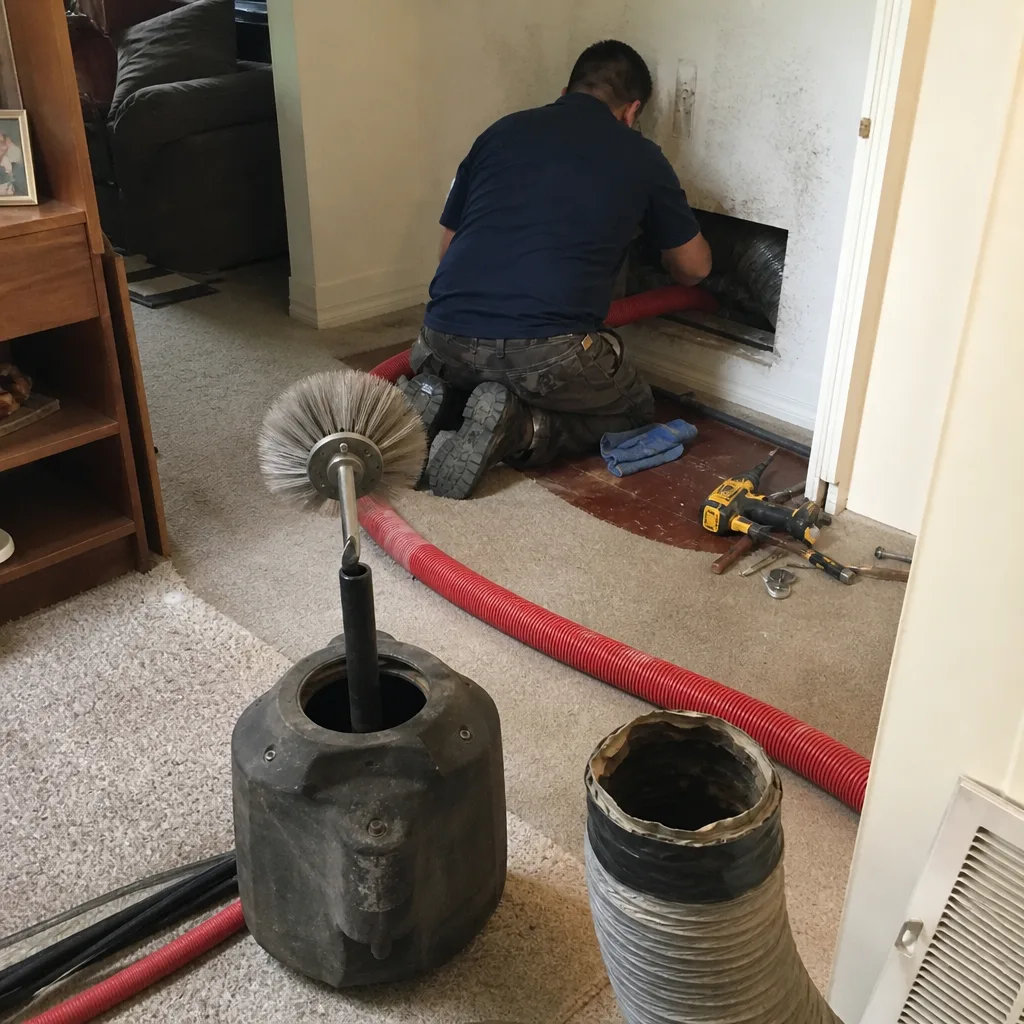 Before
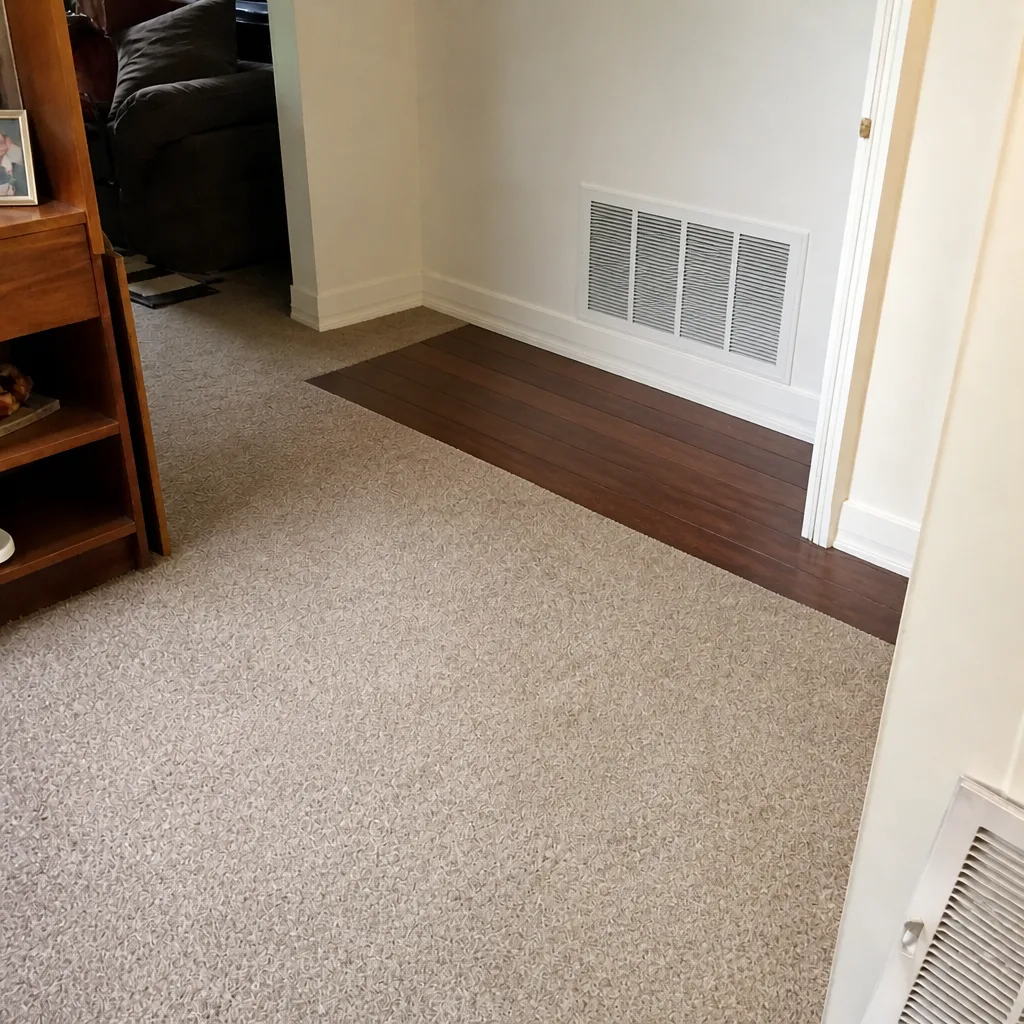 After
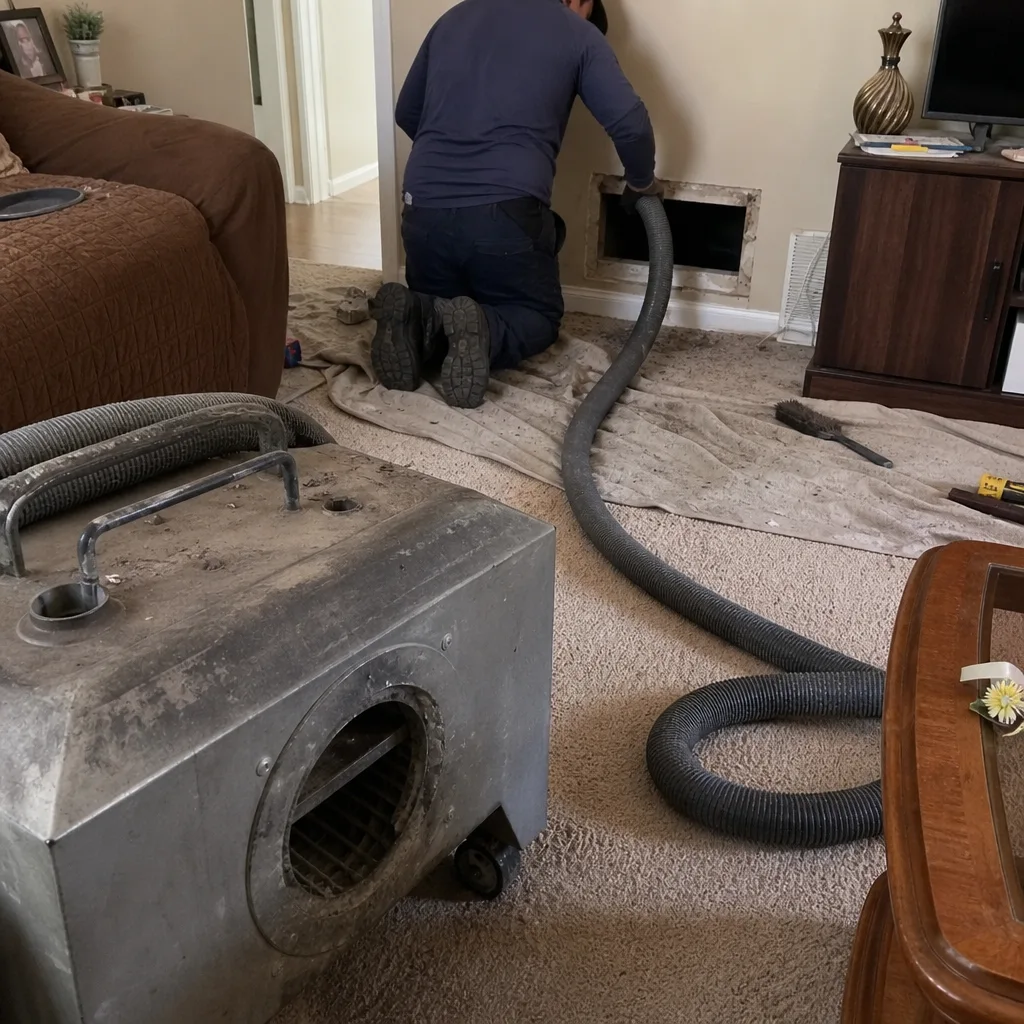 Before
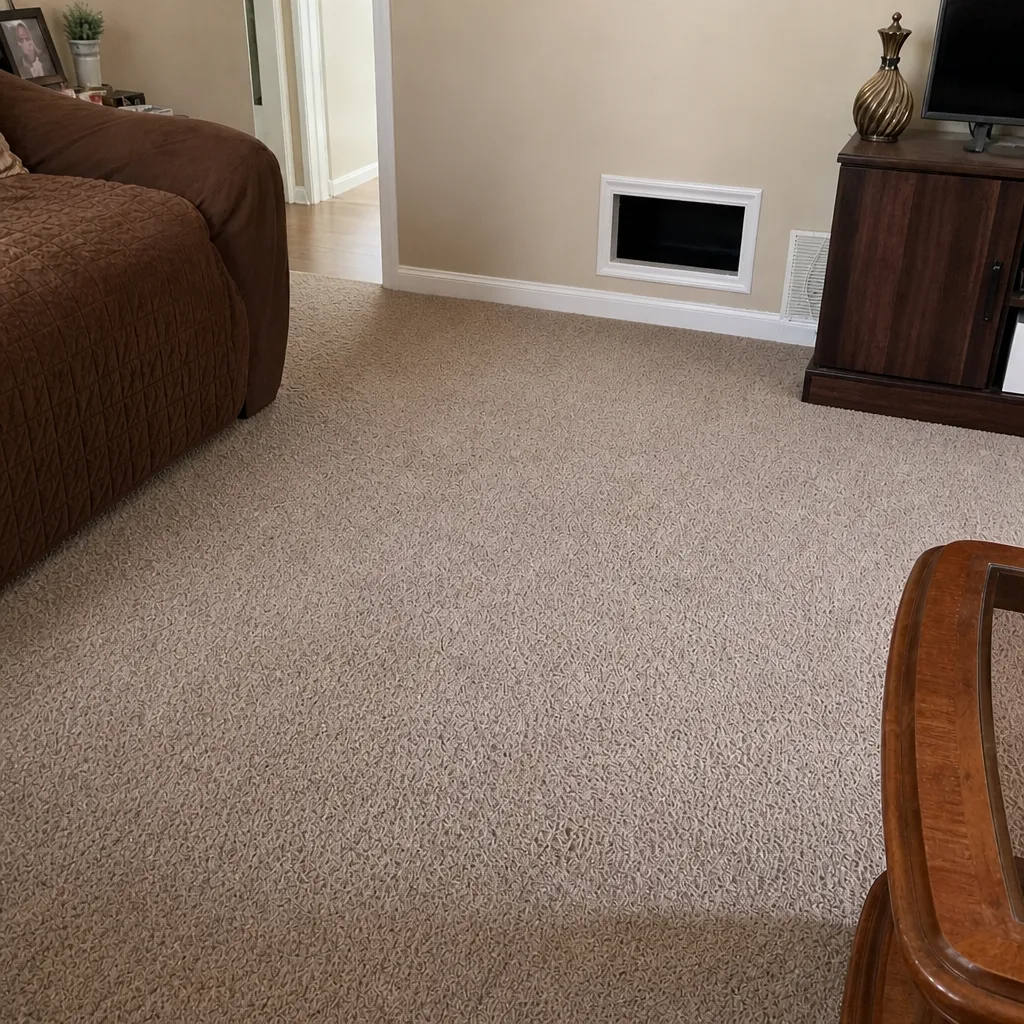 After
 Before
 After
When to Call a Professional
Duct cleaning isn’t an annual chore for most homes. It’s a specific-service response to a specific condition. Call a professional when you’ve moved into an older Lakeland home and have no record of the ducts ever being cleaned, when allergy or respiratory symptoms seem worse indoors than outside, when you can see dust puffing from a register when the system starts, or when a renovation has generated a load of drywall dust that’s found its way into the system. Call also if your dryer is taking much longer than usual to dry a load. And if you can see loose, crushed, or disconnected ducting in the attic, stop cleaning and call for a repair assessment. Lakeland Duct Cleaning offers free estimates in Lakeland. Call (855) 360-9053. We answer 24/7. Fast dispatch from 7am to 7pm, Sunday through Friday.
Frequently Asked Questions
Air duct cleaning in Lakeland is priced per system, not per vent, and the fair price depends on system size, ductwork condition, and how much repair is involved. Any quote you receive should be a whole-system figure given after an in-home assessment, with the scope in writing and any optional treatments listed separately. Call (855) 360-9053 for an exact quote. Estimates are free.
A very low quote usually means the crew is cutting equipment, scope, or both. The most common shortcut is consumer-grade vacuum equipment that can’t capture what it dislodges, paired with per-vent pricing that only covers part of the system, plus an on-site upsell once the truck is parked in your driveway. The work looks the same on paper. It isn’t. Call (855) 360-9053 for an exact quote. Estimates are free.
The right answer is before-and-after photos of the inside of your ductwork, taken by the crew during service. If a contractor can’t show you what your ducts looked like before and after, you have no way to verify the work happened. Ask for it in the scope of work before booking. Call (855) 360-9053 for an exact quote. Estimates are free.
Most homes don’t need it on a fixed schedule. It’s warranted when the ducts have never been cleaned in an older home, after a renovation fills the system with dust, when allergies are worse indoors, or when you can see dust at the registers. A contractor who won’t tell you that and instead insists on a recurring plan is selling, not advising. Call (855) 360-9053 for an exact quote. Estimates are free.
No. Cleaning removes debris from intact ductwork. Repair addresses ductwork that’s disconnected, crushed, or deteriorating. If your ducts are damaged, repair comes first, and cleaning after. When you’re vetting contractors in Lakeland, ask directly whether they handle repair in-house or refer it out. Call (855) 360-9053 for an exact quote. Estimates are free.
Yes, through the Florida DBPR online license lookup, which is free and public. Ask the contractor for their license number and the name as licensed, then search the DBPR portal to confirm the license is active and the category matches the work. If they can’t provide a number, don’t book. Call (855) 360-9053 for an exact quote. Estimates are free.
The Bottom Line
Hiring an air duct cleaning contractor in Lakeland comes down to a handful of checks you can do before anyone touches your system: five questions about equipment, NADCA membership, scope, access, and license category; verification of that license through the state DBPR lookup; and a written scope of work that includes a whole-system price per system, before-and-after photos, and a plan to seal access holes. Ask about repair capability before you book. Treat the dryer vent as a safety item, not an extra. Then call (855) 360-9053. We answer 24/7. Fast dispatch from 7am to 7pm, Sunday through Friday.
Written by the team at Lakeland Duct Cleaning.