
Last updated November 15, 2026
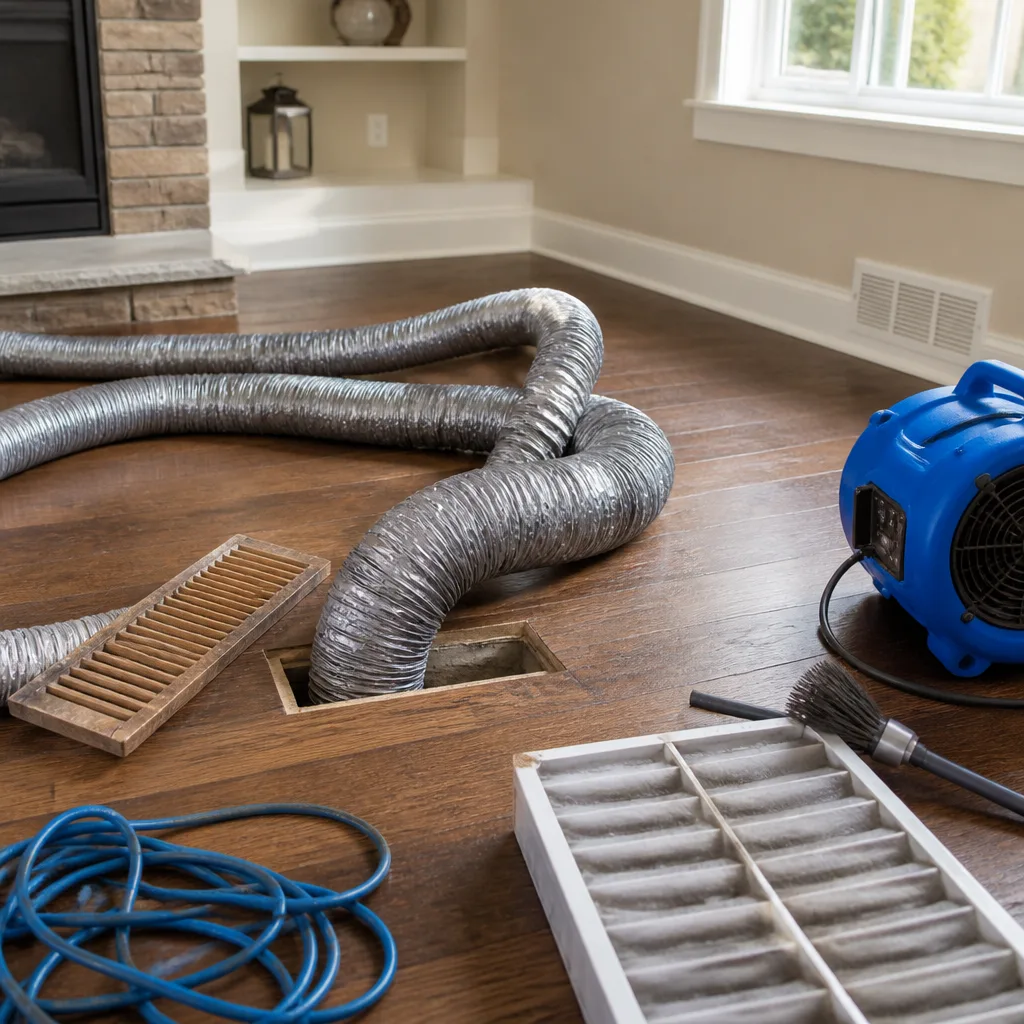 Whole-home duct cleaning
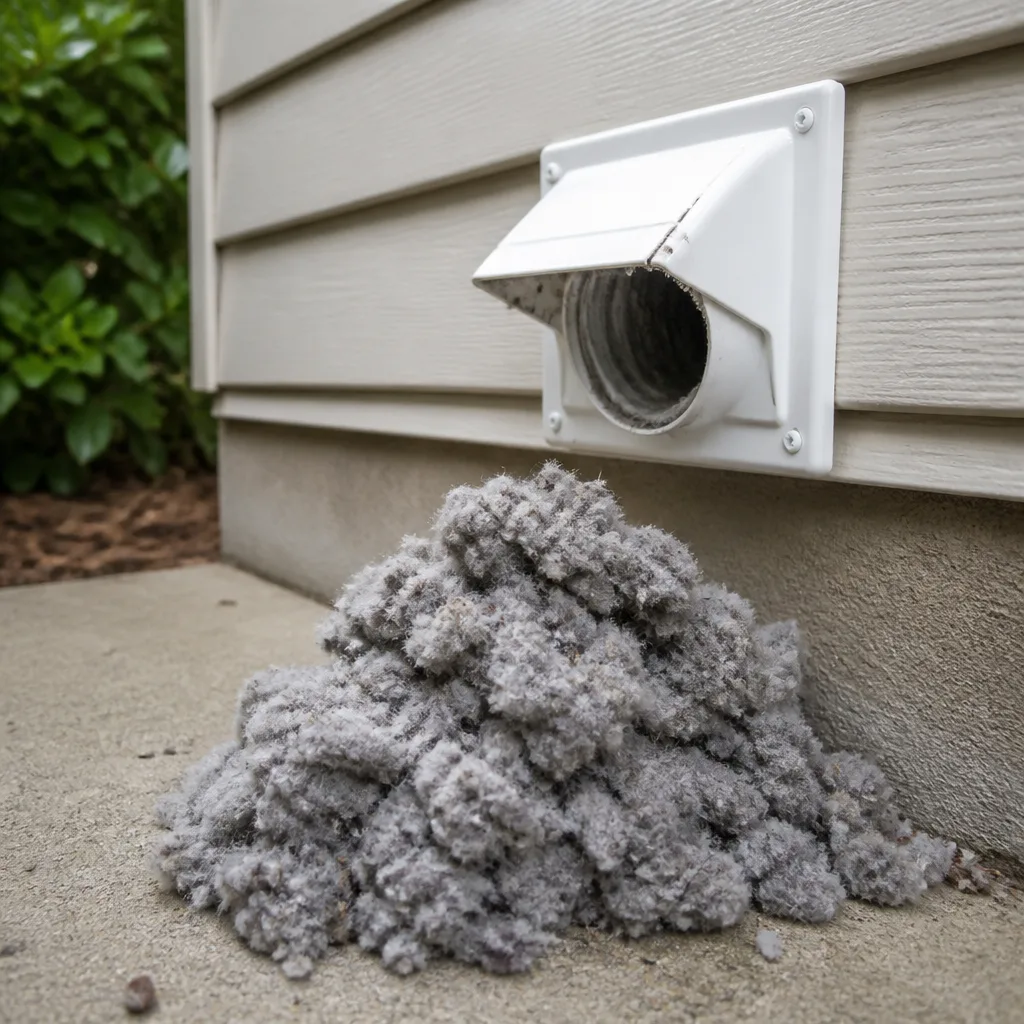 Dryer vent cleaning
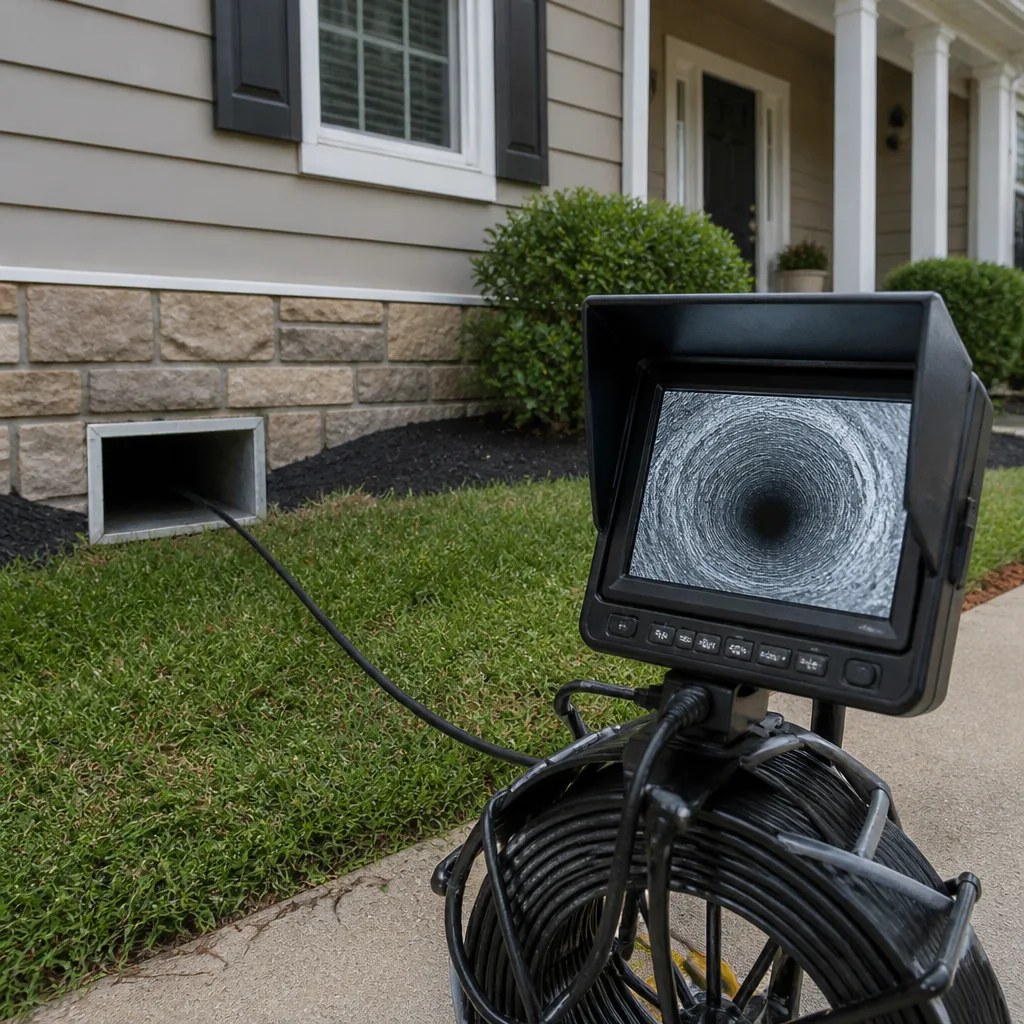 Camera inspection
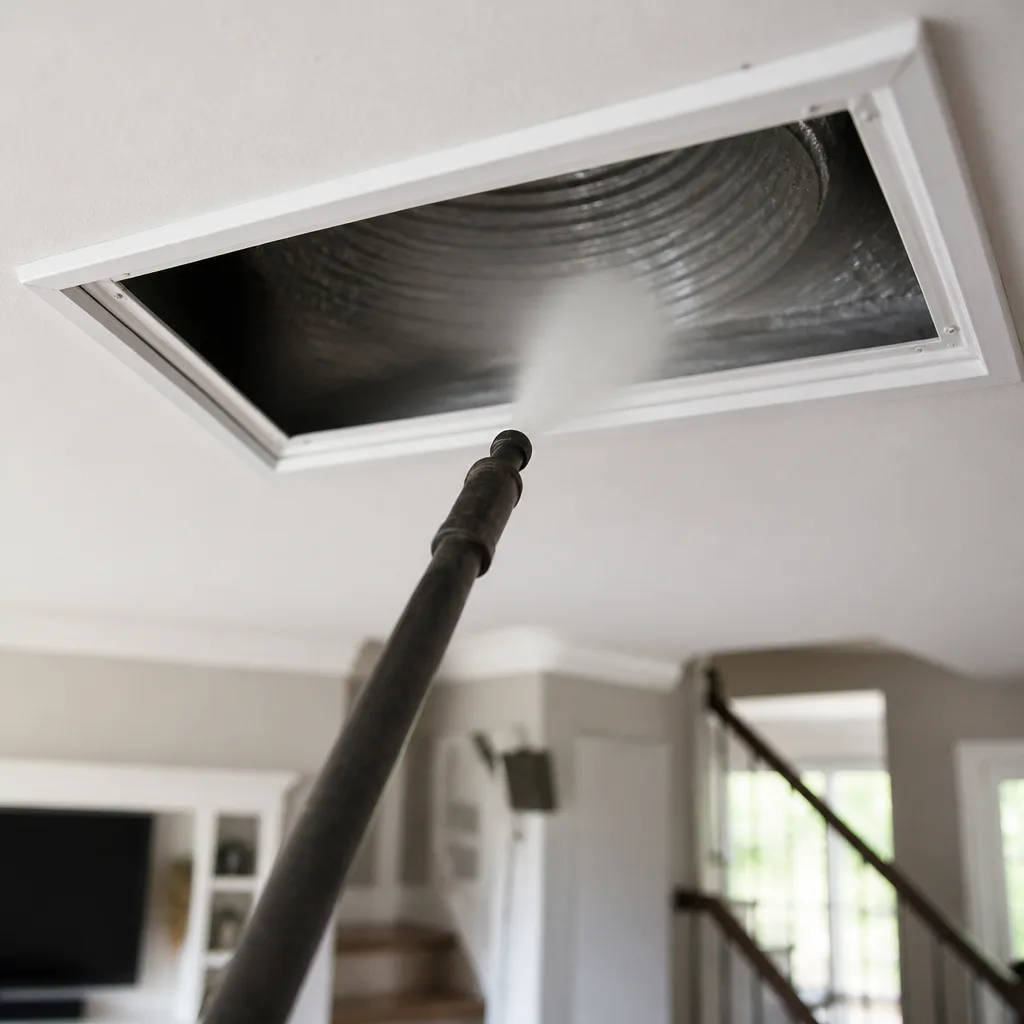 Sanitizing & deodorizing
Whole-system duct and dryer vent check with before-and-after photos - you see exactly what came out of your vents
That "$99 whole-house special" is a bait ad - the real number appears once they are in your hallway, or the "clean" is a shop-vac at the register. We photograph the inside of your ducts before and after instead.
Seasonal Air Duct Cleaning Care for Lakeland: Year-Round Homeowner’s Guide
Most air duct advice you’ll read was written for houses that get a real winter. Lakeland doesn’t. Your AC runs through heat, humidity, and storm season with barely a pause, and the idea of a “spring startup” or a “fall shutdown” doesn’t match how homes here actually operate. That’s the counterintuitive part: the maintenance calendar that matters in Lakeland isn’t built around temperature swings. It’s built around runtime hours, humidity loads, hurricane season, and remodeling dust. This guide replaces the generic four-season checklist with a rhythm that fits Central Florida. You’ll learn when to clean, when to inspect, and how each stretch of the year stresses your ductwork differently.
Quick Answer
In Lakeland, air duct maintenance is driven less by seasons than by near-constant AC runtime. The practical schedule is: clean and inspect ductwork in the pre-summer window (March to May) before peak humidity and cooling load; inspect for storm and water intrusion after any hurricane-season event (June to November); use the mild December-to-February window to check supply-duct insulation and dryer vent clearance; and treat post-renovation construction dust as a year-round trigger for a full-system cleaning rather than a seasonal one.
Styles & brands we work with
- Whole-home duct cleaning
- Dryer vent cleaning
- Camera inspection
- Sanitizing & deodorizing
Table of Contents
- Why Lakeland Ducts Don’t Follow a Four-Season Calendar
- Pre-Summer (March to May): The Right Window to Clean
- Hurricane Season (June to November): Storm, Surge, and Flood Inspection
- The Mild Window (December to February): Insulation Wrap and Dryer Vent Clearance
- How Year-Round AC Operation Changes Your Filter Loading Rate
- Post-Renovation Timing: Construction Dust Is a Year-Round Problem
- Repair, Not Just Maintenance: When Cleaning Isn’t Enough
- Common Mistakes to Avoid
- When to Call a Professional
- Frequently Asked Questions
Why Lakeland Ducts Don’t Follow a Four-Season Calendar
In colder parts of the country, a furnace runs hard for a few months and then sits idle. Ducts get a break. In Lakeland, the cooling system carries the load almost continuously, which means your ductwork is moving filtered air every week of the year. That constant airflow changes the whole maintenance picture. Debris doesn’t settle in for a dormant season and get flushed out later. It accumulates steadily, and the recirculation pattern inside a running system can keep fine particles suspended longer than a homeowner expects.
Here’s what that means in practice. Filter loading happens faster in Lakeland than the standard “change it every three months” advice suggests, because the system never really stops running. The pre-summer ramp-up, the peak humidity months, hurricane season, and the brief mild-weather window each create a different condition inside your ductwork. Some of them call for cleaning. Some call for inspection and repair. The mistake is treating all four the same way.
We’ve seen this pattern play out across Lakeland’s mix of established neighborhoods and newer subdivisions. A house near Lake Hollingsworth with mature trees faces different debris loads than a new build in a subdivision still under construction nearby. The calendar gives you the window. The house tells you what to do inside it.
When we clean a system, we use professional-grade equipment from Rotobrush and Nikro, with Abatement Technologies filtration deployed to capture dislodged contaminants at the source so they don’t recirculate through the home during service. That’s different from the consumer vacuum or leaf-blower approach some low-bid operations use. Contact cleaning physically agitates and extracts debris from duct walls. Air washing alone doesn’t.
Pre-Summer (March to May): The Right Window to Clean
March through May is the smartest time to schedule air duct cleaning in Lakeland. Two reasons. First, you get ahead of the peak cooling season, so the system starts its heaviest runtime with clean ducts and fresh airflow. Second, you’re cleaning before humidity climbs into its summer range, when dislodged dust and organic material sitting in a damp, dark duct can create conditions you’d rather avoid.
Consider what a Lakeland spring actually looks like for your HVAC system. The AC transitions from occasional use to near-constant operation somewhere in this window. Every hour it runs pulls air through the return, across the filter, and back out through supply ducts. If those supply runs already carry a season’s worth of settled dust and debris, the first heavy weeks of summer push it around the house.
A pre-summer service visit in a Lakeland home typically covers:
- A full-system inspection of supply and return ducts, including accessible plenum connections
- Rotobrush contact cleaning to agitate and extract debris from duct walls
- HEPA filtration capturing dislodged particulates during the cleaning itself
- Filter condition check and replacement recommendation
- A visual look at duct connections, wraps, and any signs of separation or deterioration
That last point matters more than people realize. Cleaning is only half of full-system thinking. A duct run that’s disconnected or deteriorated will keep leaking conditioned air no matter how clean the inside is. If we find damage during a pre-summer visit, we can address it as a duct repair job rather than leaving it for another day.
Some homeowners prefer a numbered approach. Here’s how to get ready for a pre-summer cleaning:
- Note any rooms that feel warmer than the rest of the house, or any rooms with weak airflow. These point to specific problems your technician should check.
- Clear access to the return grille and any supply registers near furniture or stored items.
- Write down the filter size and type currently installed, or have it in hand when the technician arrives.
- Ask about duct repair during the same visit if any ducts look loose, crushed, or wrapped in failing insulation.
- Ask which equipment will be used. Professional contact cleaning and HEPA containment matter more than a low quote.
If you want to understand what a proper clean involves beyond the pre-summer window, our Lakeland Duct Cleaning team walks through the full-system method in detail on our main service page.
Hurricane Season (June to November): Storm, Surge, and Flood Inspection
Hurricane season is the stretch most seasonal duct guides ignore, and it’s the one Lakeland homeowners should pay closest attention to. Between June and November, storm events can compromise ductwork in ways that have nothing to do with cleaning. Flooding events, water intrusion near the air handler, roof damage that lets moisture into attic duct runs, and power surges that stress the HVAC system all create conditions worth inspecting afterward.
After any significant storm event in Lakeland, here’s what to look at:
- Water staining or dampness on insulation wrap around supply ducts, especially attic runs
- Visible moisture near the air handler or any supply register following a flooding event
- Loose or disconnected flex duct at any joint or connection point
- Debris that may have entered through exterior vents or a damaged return path
- Any musty odor coming from supply registers after the storm passes, which can point to moisture that’s been pulled through the system
Power surges are their own concern. When the grid comes back on after an outage, the HVAC system can take stress that affects blower operation and airflow. If the system has been running poorly since a storm, that’s worth a look before the next heavy runtime period.
A three-step post-storm routine:
- Visit each supply register and note any odor, moisture, or visible debris.
- Check the filter. If it’s damp or looks unusually clogged, replace it before restarting routine use.
- If you smell musty air or see water staining on any duct run, schedule an inspection before the system runs another cycle.
We can work with you on inspection and repair after a storm event, and we handle duct repair as a defined service so you’re not referred out to a contractor who may or may not show up.
The Mild Window (December to February): Insulation Wrap and Dryer Vent Clearance
December through February in Lakeland is the closest thing to a maintenance break the year provides. Cooling load eases, windows open, the AC gets some rest. That makes it the ideal window for two things that don’t need the system running to address: inspecting insulation wrap on supply ducts, and checking dryer vent clearance.
Insulation wrap on attic supply ducts is where you’ll find most of the slow damage in a Lakeland home. Heat and humidity in an attic space can degrade wrap over time. When wrap fails, you lose cooled air before it reaches the register, and the system works harder to compensate. During the mild window, it’s easy to inspect attic runs without fighting peak summer heat, so a technician can actually climb up and look.
Dryer vent clearance gets overlooked because it’s not part of the AC system. It’s a separate fire safety concern, and it deserves its own attention. dryer vent cleaning removes lint buildup that restricts airflow and creates a fire risk. During the mild window, here’s what to check:
- Lint buildup at the lint trap and inside the dryer cabinet
- The full length of the vent run from the dryer to the exterior termination
- The exterior vent flap. If it doesn’t open freely when the dryer runs, airflow is restricted
- Any kinks, crushed sections, or excessive bends in the flexible vent
Most duct cleaning services treat the dryer vent as an afterthought or skip it entirely. We treat it as a dedicated service because it addresses a leading household fire risk. Clearing a blocked or lint-packed vent is straightforward when it’s done as a scheduled maintenance item, and it’s much easier during a mild-weather window than scrambling when you notice the dryer taking too long.
How Year-Round AC Operation Changes Your Filter Loading Rate
In Lakeland, your system runs nearly year-round, and that directly affects how quickly the filter loads. If you live in a colder climate and follow the “three months per filter” guidance, you’re matching that interval to a system that runs maybe half the year. In Lakeland, that same filter is doing more work per year. The practical takeaway: check the filter more often here, and replace it based on condition rather than the calendar.
Factors that speed up filter loading in Lakeland:
- Near-constant runtime from spring through fall
- Construction dust from active remodeling nearby
- Pollen from the extended growing season and area vegetation
- Higher occupancy and cooking activity in a home that keeps windows closed most of the year
A simple habit that helps: pull the filter once a month and hold it up to a light source. If you can’t see light through it, replace it. That’s a more reliable signal than the calendar, because Lakeland’s loading rates vary by house, neighborhood, and how much the AC is running.
For systems with installed air quality components, we’re familiar with Honeywell and Aprilaire products commonly found in Central Florida homes. If you have one of those systems, filter type and replacement interval matter for the whole setup, not just the AC. We can advise on the right filter for your system during a cleaning visit.
Post-Renovation Timing: Construction Dust Is a Year-Round Problem
Lakeland’s active remodeling market means construction dust in ducts is a year-round issue, not a seasonal one. A kitchen renovation, a room addition, or a floor replacement in a nearby house sends fine drywall dust and debris into the air, and much of it settles into ductwork. The same is true for structural work in your own home, whether it’s a bathroom remodel or a full renovation.
The right time to schedule a cleaning after renovation is once the work is finished and the dust has settled, not while the crew is still cutting and sanding. If you clean mid-project, the ducts will just fill back up. Wait until the final walkthrough, then book a full-system clean in the first couple of weeks after.
Renovation-related triggers for a cleaning:
- Drywall cutting, sanding, or demolition anywhere in the home
- Floor refinishing or tile removal
- A room addition that ties into existing ductwork
- Any remodel where dust visibly reached the return grille or nearby registers
If you’re remodeling in a neighborhood like Dixieland or the historic districts around downtown Lakeland, older homes sometimes have duct runs that are original or have been patched over the years. A post-renovation cleaning is a sensible moment to also check for disconnected runs and damaged insulation, since access is already part of the job.
Repair, Not Just Maintenance: When Cleaning Isn’t Enough
Cleaning solves a different problem than repair, and separating them is the key to full-system thinking. Cleaning removes accumulated debris. Repair fixes the structural issues that cleaning can’t: disconnected joints, crushed flex runs, deteriorating insulation wrap, and duct sections that no longer connect cleanly. If your ducts are damaged, cleaning them without repairing the damage leaves the underlying problem in place.
The signs you may need repair rather than maintenance alone:
- One or more rooms that never get enough airflow no matter how clean the ducts are
- Visible disconnection at a joint or plenum
- Crushed or kinked flex duct in the attic or crawl space
- Insulation wrap that has torn, sagged, or separated from the duct
- Whistling or loud airflow noise from a register, which can point to a leak or restriction
We handle duct repair as a dedicated service alongside cleaning, which means you’re not dealing with two contractors and a gap between their schedules. When a technician finds damaged ductwork during a cleaning, they can address both in a single visit and give you a clear picture of the total scope.
Protective treatment products through Guardsman are also available as part of the service scope if you’re interested in adding a protective step after cleaning. We mention it as an option, not a requirement. The core work is contact cleaning, HEPA containment, and repair where needed.
See the difference
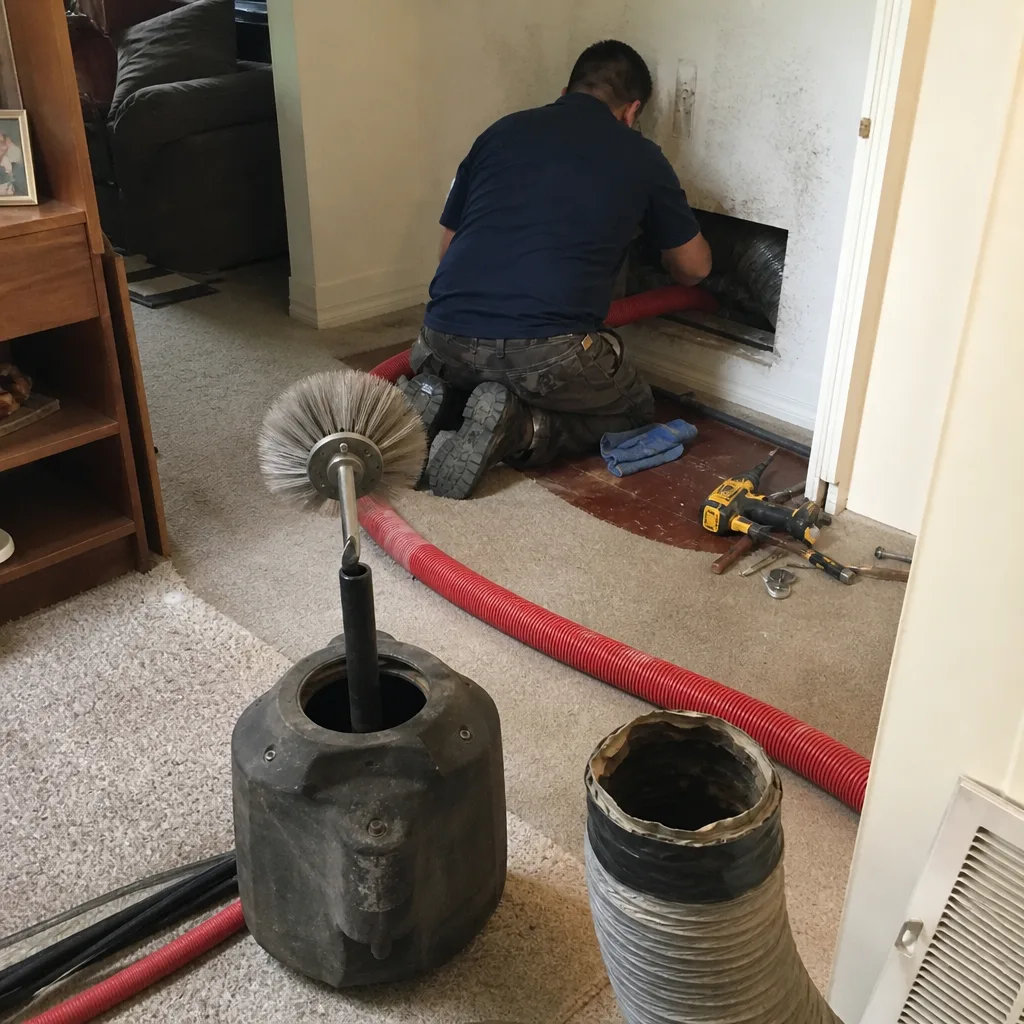 Before
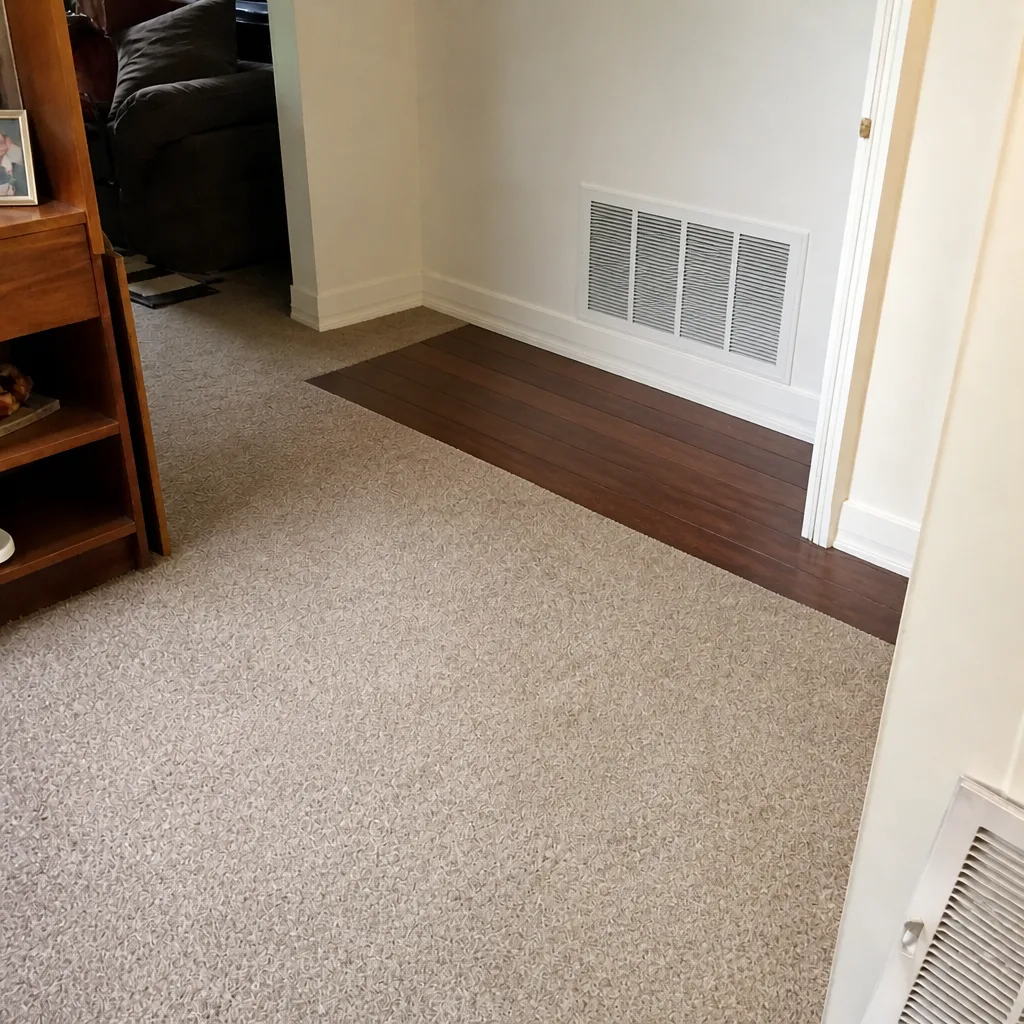 After
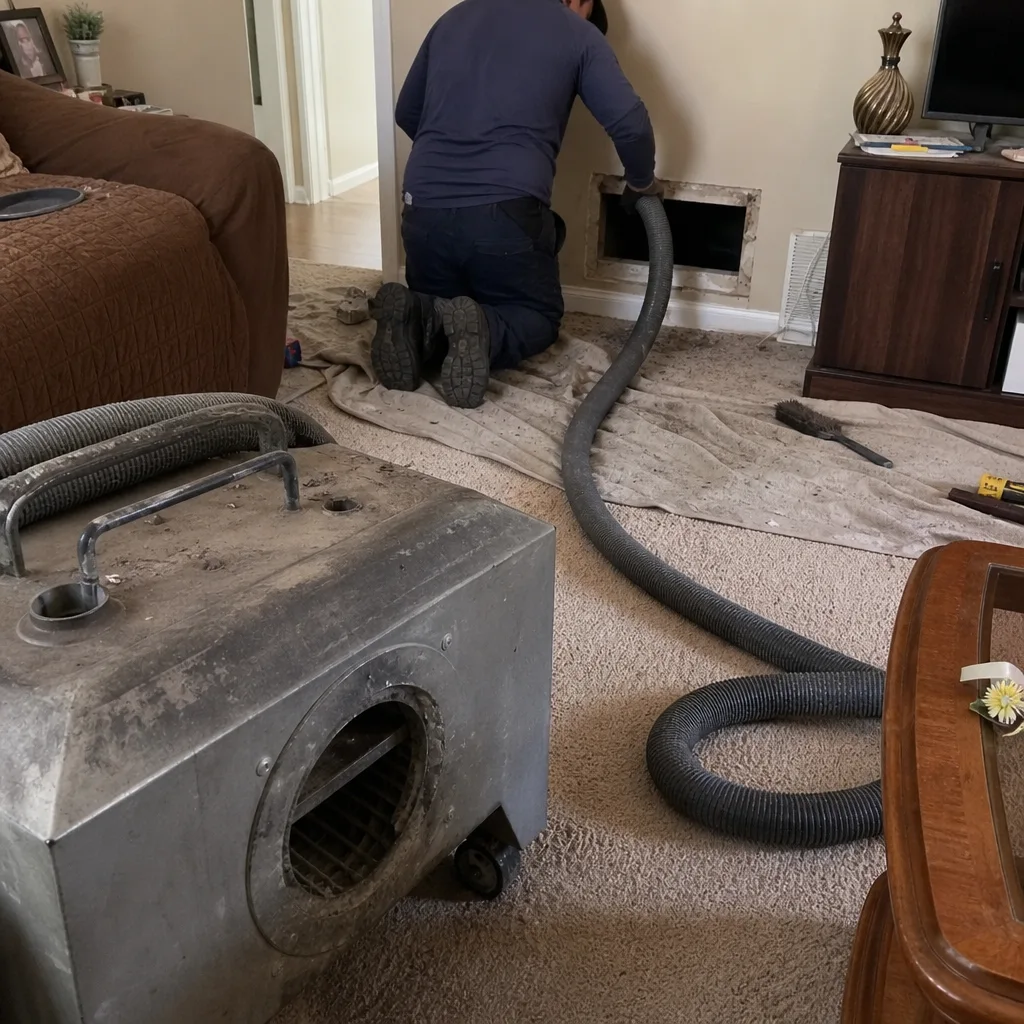 Before
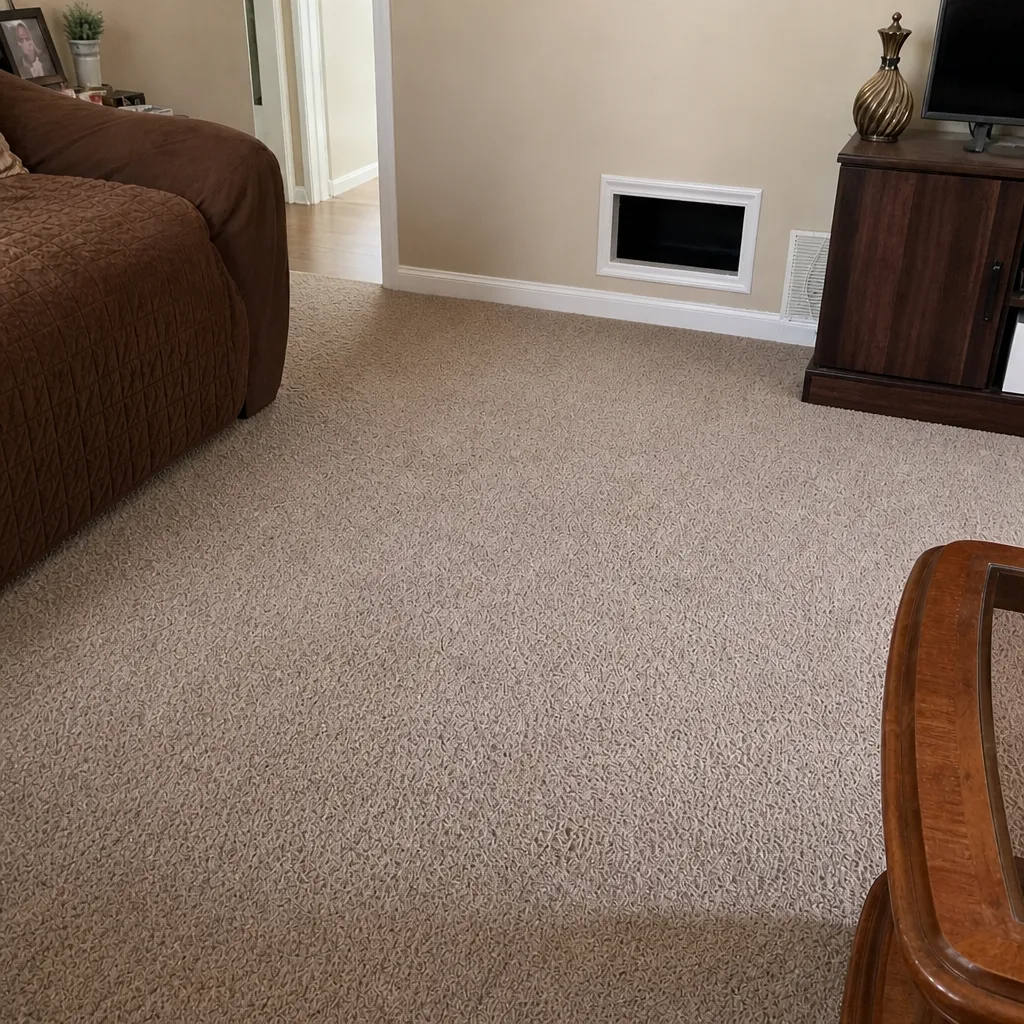 After
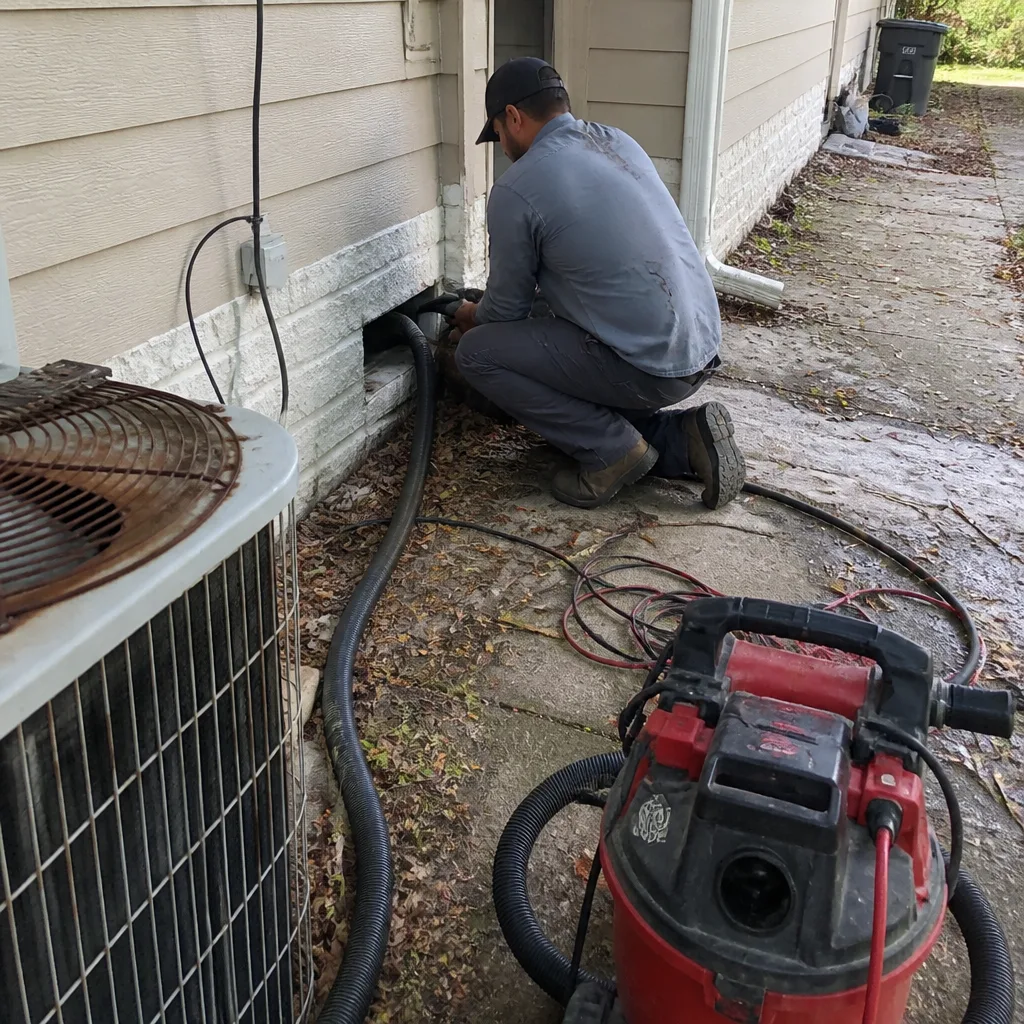 Before
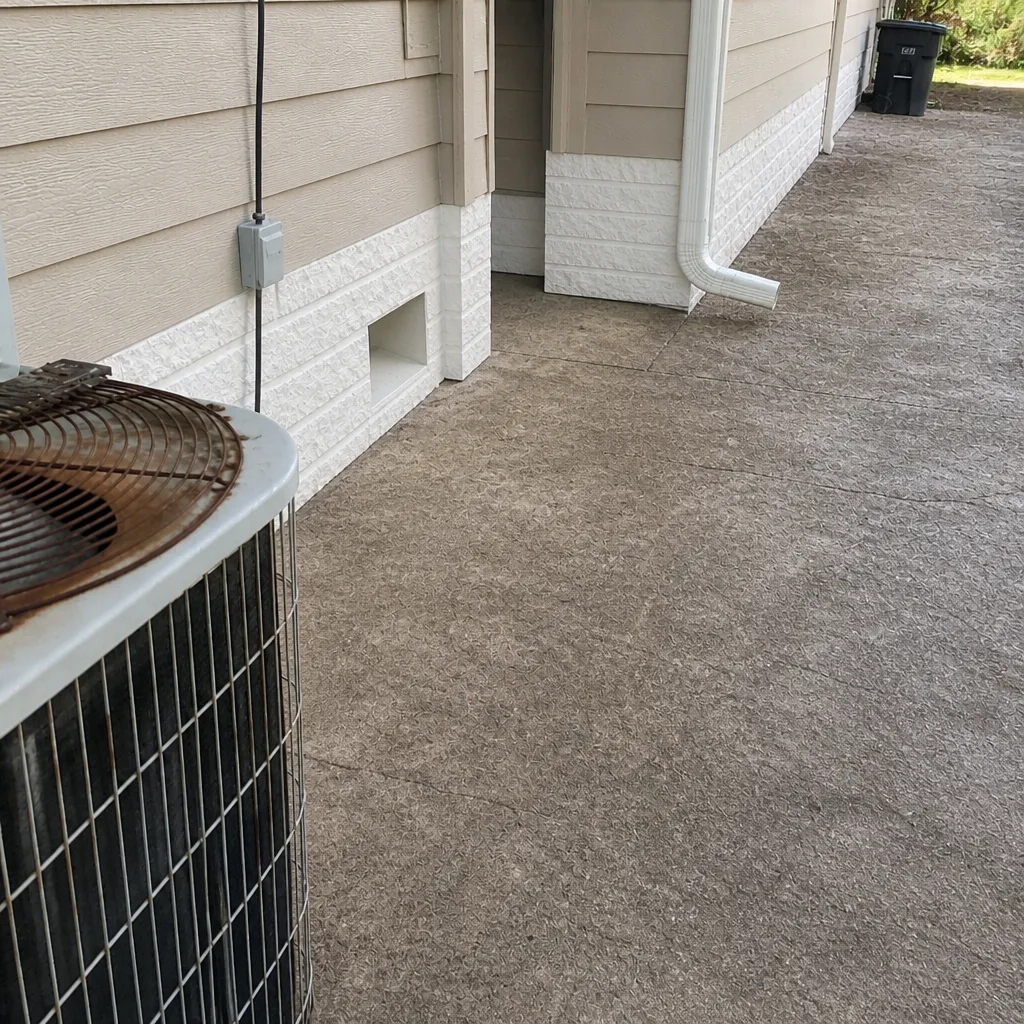 After
Common Mistakes to Avoid
- Following a northern four-season calendar in Lakeland. Winterization and fall shut-down guidance doesn’t fit a place where the AC runs nearly all year. Build your schedule around runtime and storm season instead.
- Skipping the post-storm inspection. It’s easy to assume that because the house stayed dry, the ducts are fine. Moisture intrusion and disconnected runs don’t always show up as visible water, so a quick inspection is worth it after any significant event in the Lakeland area.
- Choosing the lowest bid without asking about equipment. A low quote often means a consumer vacuum or a leaf-blower approach that air-washes duct walls instead of scrubbing them. Ask what equipment will be used and whether HEPA filtration is part of the job.
- Cleaning before the renovation is finished. Cleaning mid-project wastes the visit, since dust fills the ducts again before the final walk-through. Wait until the work is done, then schedule.
- Ignoring the dryer vent during mild-weather maintenance. Lint buildup is a fire safety concern that doesn’t announce itself. Add dryer vent cleaning to your cool-season routine rather than waiting for a blocked airflow symptom.
- Treating cleaning as a substitute for repair. If the ducts have disconnected runs or failing insulation wrap, a cleaning alone leaves the problem in place. Full-system thinking means addressing both.
- Replacing the filter on a fixed calendar instead of checking condition. Lakeland’s near-constant runtime means filters load at a rate that varies by home. Check monthly and replace based on what you see.
When to Call a Professional
Some maintenance is a monthly habit. Some needs a technician. Call us when you’re seeing any of the following: a room that stays warm despite a clean filter, a musty smell from supply registers, visible damage or disconnection in attic duct runs, persistent asthma or allergy symptoms that seem tied to the HVAC system, a dryer that takes noticeably longer to dry clothes, or any ductwork that hasn’t been inspected in several years. Post-storm events and post-renovation dust are also reliable triggers. If you’ve just moved into an older Lakeland home, a full-system inspection gives you a baseline you can plan around. Lakeland Duct Cleaning offers free estimates in Lakeland. Call (855) 360-9053. We answer 24/7. Fast dispatch from 7am to 7pm, Sunday through Friday.
Frequently Asked Questions
March through May is the best window, before peak cooling season and high humidity arrive. Cleaning then means clean ducts going into the months of heaviest runtime. The mild December-to-February window is also a good time for inspection and repair work, since the system gets some rest.
Most Lakeland homes benefit from a full-system cleaning every few years, but the trigger should be condition rather than a fixed schedule. Options to check: recent renovation, post-storm events, persistent allergy symptoms, or a home you’ve just moved into. If any of those apply, it’s worth scheduling a cleaning regardless of when the last one happened. Call (855) 360-9053 for an exact quote. Estimates are free.
Yes, in ways that go beyond debris. Storm events can cause water intrusion near the air handler, moisture in attic duct runs, or power surges that stress the HVAC system. Inspecting supply ducts for damp insulation and checking for disconnected runs after any significant storm is a smart move. If you smell musty air or see water staining, schedule an inspection before the system runs another cycle.
Yes, and it should happen after the work is finished, not during. Drywall dust and debris settle into ductwork and then move through the house for months if left in place. Wait for the final walkthrough, then schedule a full-system clean in the first couple of weeks.
Low quotes often come from operations that air-wash the ducts with a consumer vacuum, miss the return plenum, and skip HEPA containment during service. Contact cleaning with professional equipment like Rotobrush physically agitates and extracts debris from duct walls, and that costs more to do properly. Ask what equipment will be used and whether HEPA filtration is included before comparing prices. Call (855) 360-9053 for an exact quote. Estimates are free.
Ask for before-and-after photos of your own ductwork as part of the service. A professional operation should be able to show you the condition before cleaning and the result after. That’s a reasonable request, and it’s the clearest way to confirm the job was done as described.
The Bottom Line
Lakeland doesn’t run on four seasons, and your duct maintenance calendar shouldn’t either. The rhythm that fits this climate is built around near-constant AC runtime, humidity loads, hurricane season, and remodeling dust. Clean in the pre-summer window, inspect after every storm event, use the mild winter stretch to check insulation wrap and dryer vent clearance, check your filter monthly, and clean after any renovation is complete. Treat cleaning, repair, and dryer vent service as one connected schedule rather than three separate errands. When ducts are damaged, address the damage instead of scheduling another cleaning. Our technicians have up to 8 years of experience with the equipment and the local conditions that shape the work. Call (855) 360-9053. We answer 24/7. Fast dispatch from 7am to 7pm, Sunday through Friday. Estimates are free and the price is set per job by the written estimate.
Written by the team at Lakeland Duct Cleaning.